

Home / Environment / Unprecedented Raptor Numbers Hint at Shifting Migrations
Unprecedented Raptor Numbers Hint at Shifting Migrations
4 Apr
Summary
- Threatened raptors, including eagles and vultures, show a significant increase in Desert National Park.
- Unusual congregation of migratory birds attributed to cooler weather and habitat conditions.
- Ongoing conflicts in the Middle East may be disrupting traditional migratory routes.
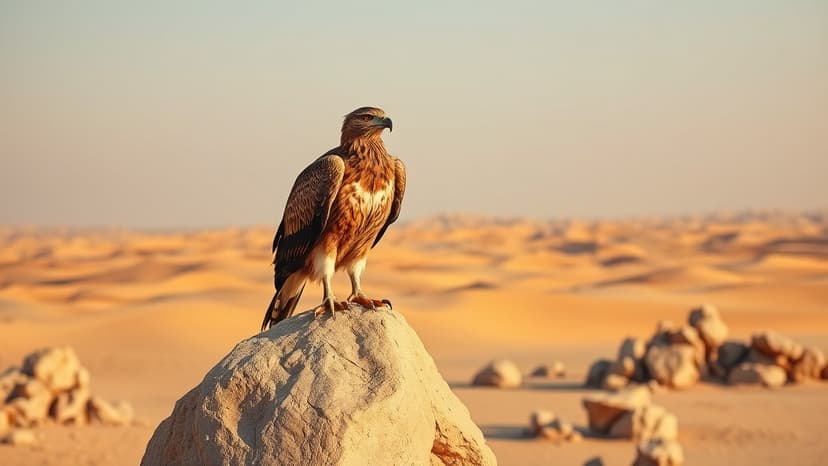
Desert National Park in Jaisalmer has observed a significant increase in raptor populations, including threatened Schedule I species like the Steppe Eagle and various vultures. These migratory birds have congregated in unusually high numbers and have not yet returned to their native regions. Factors contributing to this phenomenon include continuous rainfall leading to cooler weather, favorable habitat conditions within the park, and potential disruptions to migratory routes caused by ongoing conflicts in the Gulf and Middle Eastern regions.
Researchers from the Wildlife Institute of India are actively studying these raptors as part of the Thar Raptor Ecology Project. This initiative aims to understand the decline in raptor populations and suggest conservation measures. To track movement patterns and habitat use, experts have fitted GPS transmitters to four vultures, two Tawny Eagles, and two Egyptian Vultures. The study also investigates competition for food resources at carcass sites, examining interactions among various scavenger species.
Forest Department officials note that while Steppe Eagles are winter visitors, their heightened presence this year suggests possible shifts in migration patterns, potentially influenced by external geopolitical or environmental factors. Some birds that did not migrate back last year have even begun nesting in the park. Awareness programs are also being conducted to engage local communities in raptor conservation, promoting practices like using non-toxic livestock treatments and conserving nesting trees.
