Home / Environment / Rajasthan's Tiger Comeback: From Brink to Boom
Rajasthan's Tiger Comeback: From Brink to Boom
10 May
Summary
- Rajasthan now has nearly 140 tigers, a significant increase from the mid-2000s.
- A pioneering reintroduction program at Sariska transformed a near-extinct population.
- Leopards thrive in Jaipur's Jhalana reserve, showcasing urban wildlife success.
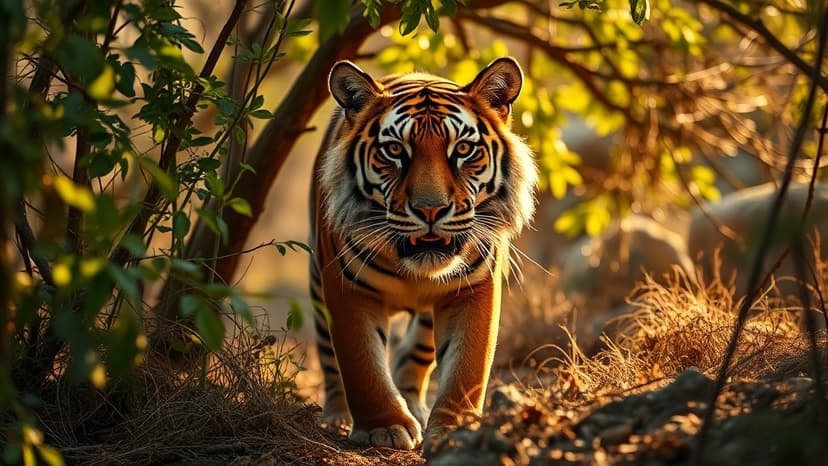
Rajasthan's tiger population has experienced an extraordinary transformation, expanding from a sparse presence in Ranthambore National Park in the mid-2000s to nearly 140 tigers across six reserves today. This significant recovery began in earnest after Sariska lost all its tigers to poaching in 2005, prompting a pioneering reintroduction program in 2008. Initially fraught with challenges, conservation efforts have since stabilized, with Sariska now boasting over 50 tigers and recognized as a major conservation success. The state's focus has shifted to securing adequate space for dispersing tigers, enhancing connectivity between reserves like Ranthambore and Mukundra Hills. Mukundra Hills Tiger Reserve, however, illustrates the complexities of large carnivore conservation, with its population stabilization proving difficult.
Wildlife has increasingly become an economic driver in Rajasthan, with tourism generating employment and revenue around reserves like Ranthambore. The state has also emerged as a premier leopard safari destination. Jhalana Leopard Reserve in Jaipur, established under a dedicated Project Leopard, offers high sighting opportunities within an urban landscape. Jawai Bandh presents a unique model of human-leopard coexistence, though development pressures raise concerns, leading to recent court-ordered restrictions on tourism and construction.
Alongside these successes, Rajasthan is central to critical species recovery programs, notably for the Great Indian Bustard. With fewer than 200 individuals remaining, intensive conservation efforts, including captive breeding programs, are underway. These initiatives have cautiously boosted the population, with plans for rewilding and release into protected habitats. Rajasthan's commitment to bird conservation is further recognized by the inclusion of key reserves in global action plans. However, the state's ecological fragility was highlighted by a major avian botulism outbreak in Sambhar Lake in 2019, which caused the death of over 18,000 birds, underscoring the need for continuous monitoring and climate-resilient conservation strategies.


