Home / Environment / Rabbit Island's ecological crisis: Boars hunt rabbits due to feeding
Rabbit Island's ecological crisis: Boars hunt rabbits due to feeding
31 Jul
Summary
- Unregulated feeding has caused ecological damage on Okunoshima.
- Wild boars are now hunting live rabbits on the island.
- Overeating has created a distinct 'rabbit line' on the landscape.
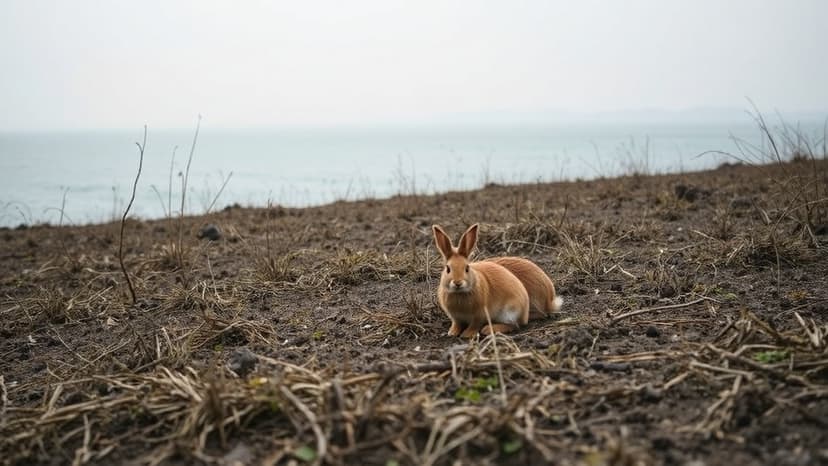
Okunoshima, Japan's famous "Rabbit Island," is experiencing severe ecological strain due to unchecked tourist feeding, as reported in a study released on July 29, 2026. The influx of visitor-provided food has inflated the rabbit population beyond the island's natural carrying capacity, leading to significant environmental degradation.
This abundance of food has also altered animal behavior, with wild boars observed scavenging leftover rabbit food and even hunting live rabbits. Researchers noted unusual interactions between boars, rabbits, and humans within the island's confined environment, a situation exacerbated by concentrated feeding areas drawing boars into close proximity with rabbits.
The landscape on Okunoshima now shows a clear "rabbit line" where vegetation has been consumed up to a certain height, indicating severe overgrazing. The ecological impact extends to scavenger birds like crows and black kites, which are attracted to feeding sites, further disrupting the local ecosystem.
While the study highlights the damage, it does not call for a ban on wildlife tourism. Instead, it emphasizes the necessity of implementing strict feeding regulations, active monitoring, and developing a long-term conservation plan. This plan should involve collaboration between local communities, tourism operators, scientists, and government agencies to ensure the preservation of both the wildlife and the island's environment.
Historically, Okunoshima was known as "Poison Gas Island" during World War II, housing a secret military factory that produced chemical weapons. After the war, the site was transformed into a national park, with the Okunoshima Poison Gas Museum opening in 1988 to educate the public about its wartime past. The current rabbit population's origins are debated, with theories ranging from a 1971 release by schoolchildren to descendants of wartime test animals, though genetic evidence points to later introductions of European domestic rabbits.


