Home / Environment / Quebec's "Eye of Quebec" Meteorite Crater Road Trip
Quebec's "Eye of Quebec" Meteorite Crater Road Trip
26 Nov
Summary
- A 5km meteorite created Quebec's 72km Manicouagan crater 214 million years ago.
- The crater's ring shape is visible from space, earning it "Eye of Quebec" nickname.
- Expedition 51 road trip traverses Quebec and Labrador via the Trans-Labrador Highway.
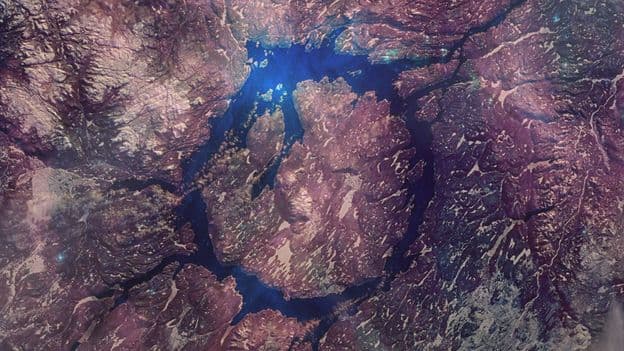
Over 200 million years ago, a 5km meteorite impacted what is now Quebec, forming the 72km-wide Manicouagan crater. This massive impact site, known as the "Eye of Quebec," is now a remarkable destination. Its unique ring shape is visible from space, with a central mountain formation. The crater began filling with water following the construction of four dams on the Manicouagan River between 1959 and 1970.
Accessible via Quebec Route 389, the Manicouagan crater is part of the expansive Expedition 51 road trip across Quebec and Labrador. This route follows the Trans-Labrador Highway. Historically, the region was roadless until the 1960s. The construction of the dams brought infrastructure and roads, but impacted the traditional territories and livelihoods of the Innu people.
Today, visitors can experience the natural wonder of the Manicouagan Uapishka Biosphere Reserve. The region offers a glimpse into the Innu culture at lodges like Station Uapishka, where local foraged ingredients are used in traditional cuisine. The journey highlights the contrast between ancient geological events and modern human exploration.


