Home / Environment / Planted Forests Outpace Nature: A Carbon Accounting Puzzle
Planted Forests Outpace Nature: A Carbon Accounting Puzzle
21 Jul
Summary
- Planted forests show faster canopy growth than natural ones.
- Global models struggle to distinguish forest types for carbon accounting.
- Hybrid strategies are advised for effective reforestation efforts.
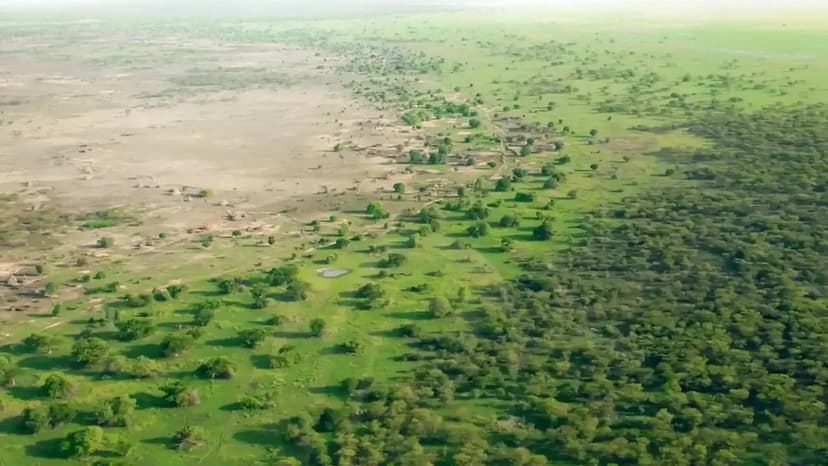
Global climate models face a significant challenge in distinguishing between managed tree plantations and natural forests, complicating accurate carbon accounting and reforestation strategies. China's extensive tree-planting efforts, particularly its Great Green Wall, have demonstrated remarkable vegetation coverage increases since 1978. Recent studies indicate these young, actively managed plantations, often monocultures like poplar, expand leaf cover substantially faster than natural woodlands.
Despite their rapid canopy growth, these plantations do not necessarily bank more carbon in the short term compared to naturally regenerating forests. Soil carbon accumulation in plantations can take over six decades to match that of secondary natural forests. This distinction is critical, as many climate models treat all forests similarly, akin to counting steps without distinguishing between walking and sprinting.
Lessons from regions like Chile, where plantation expansion encroached on native forests, underscore the need for nuanced approaches. The emerging scientific consensus favors hybrid strategies: utilizing plantations for short-term carbon capture on degraded lands while prioritizing the protection of natural forests for durable, long-term carbon storage. The success of reforestation efforts thus depends on understanding these complexities beyond simple tree counts.


