

Home / Environment / 30,000 Pine Hoverflies Released, Outnumbering Locals
30,000 Pine Hoverflies Released, Outnumbering Locals
22 Apr
Summary
- A captive breeding program released 30,000 pine hoverflies in Cairngorms National Park.
- This effort aims to revive a critically endangered insect species not seen in the wild for a decade.
- Conservationists used jam jars and a special soup to replicate larvae's natural habitat.
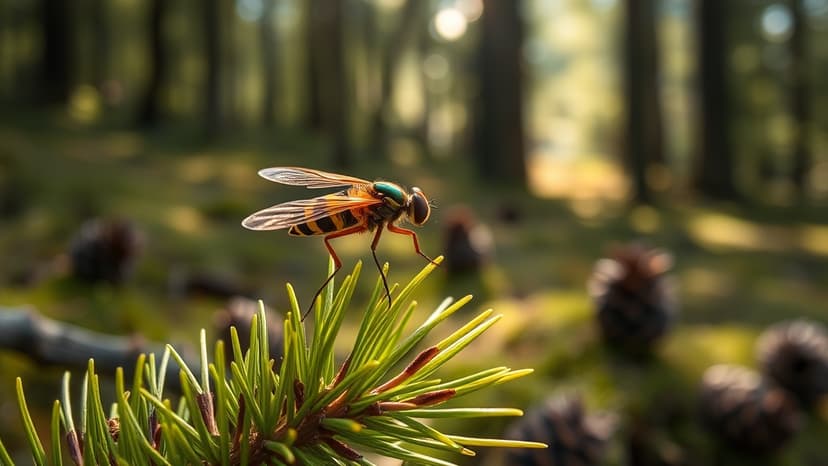
A remarkable conservation success story is unfolding in the Cairngorms National Park, where the critically endangered pine hoverfly is making a significant comeback. Following a dedicated captive breeding program initiated in 2018, conservationists have released approximately 30,000 of these rare insects into the park. This substantial release nearly doubles the number of people residing in the area.
The Royal Zoological Society of Scotland (RZSS) played a pivotal role, breeding the flies at their Highland Wildlife Park. Their team ingeniously used jam jars and a specially created 'soup' of pine wood chippings and rainwater to nurture the larvae, mimicking the conditions found in rotting pine trees.
This intensive effort is part of the Rare Invertebrates in the Cairngorms (RIC) project, a collaboration involving multiple groups and local landowners. The program aims to ensure the survival of threatened invertebrate species. A key indicator of its success was the sighting of an adult pine hoverfly in 2022, the first in a decade, marking a hopeful turning point for the species.
