Home / Environment / Ocean Salinity Drops 60%, Gulf Stream Fears Rise
Ocean Salinity Drops 60%, Gulf Stream Fears Rise
16 Feb
Summary
- Southern Indian Ocean salinity has decreased by 60% in 60 years.
- This change may disrupt global ocean circulation systems.
- Climate change is altering winds, pushing freshwater into the region.
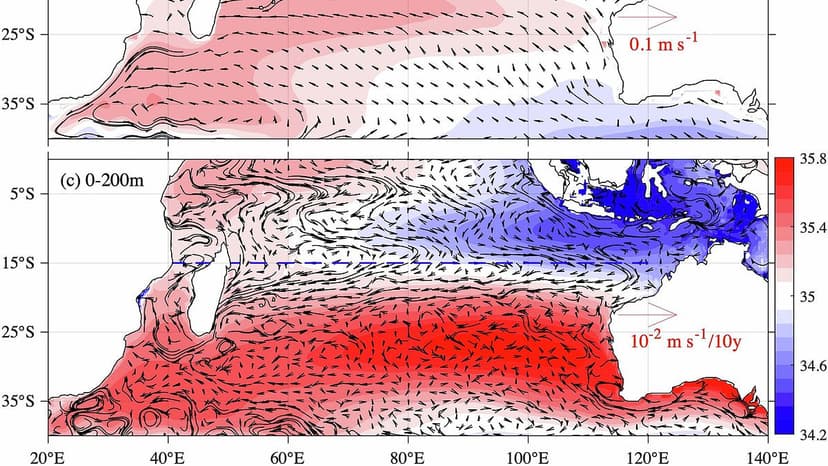
A critical region in the southern Indian Ocean has become 60% less salty over the last six decades, prompting significant scientific concern. Historically known for its high salinity due to dry conditions, this area's freshening is linked to climate change.
Researchers indicate that global warming has altered surface winds over the Indian and Pacific oceans. These shifts are channeling more freshwater into the southern Indian Ocean, decreasing its saltiness. This change affects water density and vertical mixing, crucial processes for distributing heat and nutrients.
The alteration in salinity is particularly worrying as this region plays a key role in global ocean circulation. A significant decrease in salinity could disrupt major systems like the Atlantic Meridional Overturning Circulation (AMOC), also known as the Gulf Stream.
Scientists have previously warned that a collapse of the AMOC could lead to severe global weather extremes, including deep freezes in Europe and intensified storms. The current freshening trend in the Indian Ocean suggests these circulation systems may be closer to instability than previously thought.