feedzop-word-mark-logo
searchLogin
Feedzop
homeFor YouIndiaIndia
You
bookmarksYour BookmarkshashtagYour Topics
Trending
Terms of UsePrivacy PolicyAboutJobsPartner With Us

© 2026 Advergame Technologies Pvt. Ltd. ("ATPL"). Gamezop ® & Quizzop ® are registered trademarks of ATPL.

Gamezop is a plug-and-play gaming platform that any app or website can integrate to bring casual gaming for its users. Gamezop also operates Quizzop, a quizzing platform, that digital products can add as a trivia section.

Over 5,000 products from more than 70 countries have integrated Gamezop and Quizzop. These include Amazon, Samsung Internet, Snap, Tata Play, AccuWeather, Paytm, Gulf News, and Branch.

Games and trivia increase user engagement significantly within all kinds of apps and websites, besides opening a new stream of advertising revenue. Gamezop and Quizzop take 30 minutes to integrate and can be used for free: both by the products integrating them and end users

Increase ad revenue and engagement on your app / website with games, quizzes, astrology, and cricket content. Visit: business.gamezop.com

Property Code: 5571

Home / Environment / Nuclear Revival: Can SMRs Power the Future?

Nuclear Revival: Can SMRs Power the Future?

29 Jan

•

Summary

  • Small modular reactors promise factory-built efficiency for nuclear power.
  • AI and cloud storage significantly increase energy demand from tech firms.
  • Critics question SMR cost-effectiveness and compare them to large reactors.
Nuclear Revival: Can SMRs Power the Future?

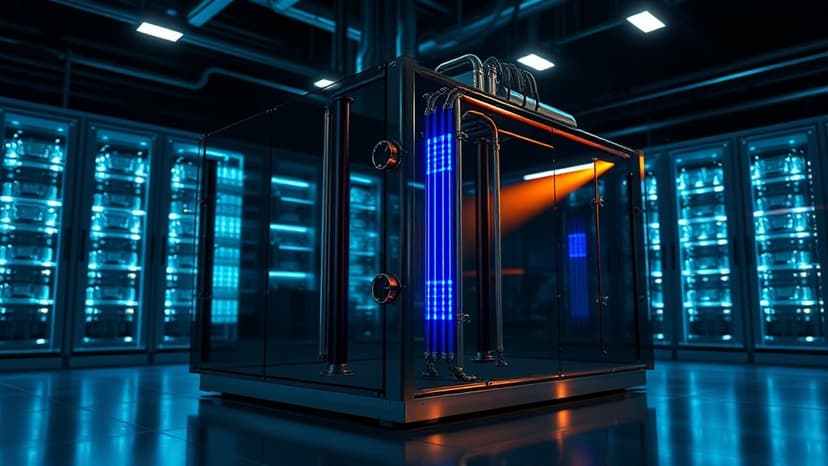
The concept of a nuclear revival is gaining traction, with a particular focus on Small Modular Reactors (SMRs). These are envisioned as factory-built, more cost-effective alternatives to traditional large nuclear plants. The surge in demand for energy from tech companies, fueled by AI and cloud storage, is a significant driver for this renewed interest in nuclear power as a stable, low-carbon energy source.

However, the historical track record of nuclear projects is marked by significant budget and time overruns, leading to skepticism about SMRs' eventual cost-effectiveness. Experts debate whether SMRs can truly deliver on the promise of cheaper electricity, especially when compared to the economies of scale offered by larger, albeit slower-to-build, reactors. Currently, no SMRs are operational globally, with all designs still under development.

trending

Nvidia share price drops sharply

trending

UGC NET December Result Soon

trending

Ronaldo trains with Al Nassr

trending

Nasdaq considers 'fast entry' rule

trending

Man City vs Newcastle tonight

trending

Axar Patel cricket career

trending

GTA 6 release confirmed

trending

Raducanu recovers, wins quarter-final

trending

Kuldeep Yadav cricket career

Opponents argue that renewables like wind and solar can be deployed much faster and are more cost-effective for meeting climate goals. They point to the lengthy permitting and construction timelines for nuclear facilities, which could delay emission reductions. The debate also touches upon the public perception of nuclear risk, with historical accidents like Chernobyl and Fukushima casting long shadows, despite a generally strong safety record in Western nations.

The energy transition faces challenges, including the intermittent nature of renewables and high energy storage costs. This creates an ongoing discussion about nuclear power's role in achieving net-zero emissions by 2050. While some advocate for phasing out nuclear over time, others believe it remains a crucial component for a stable, decarbonized energy future.

Disclaimer: This story has been auto-aggregated and auto-summarised by a computer program. This story has not been edited or created by the Feedzop team.
SMRs are designed to be factory-built, offering a potentially more cost-effective and efficient alternative to traditional large nuclear power plants, driven by the increasing energy demands of AI and cloud computing.
No, as of the current reporting period, there are no SMRs operating globally; all designs are still in various stages of development.
Arguments against nuclear power include historical cost overruns and construction delays, the long-term economic viability of SMRs compared to renewables, public perception of risk, and the lengthy timelines for deployment which could delay emission reductions.

Read more news on

Environmentside-arrow

You may also like

Stationary Batteries Power Surge: Lunar Energy Secures Huge Funding

11 hours ago • 3 reads

article image

Nuclear Power's Green Concrete Secret

16 Jan • 100 reads

article image

US Emissions Surge 2.4% in 2025, Reversing Trend

13 Jan • 130 reads

Russian Solar Inverter Boasts Modular Repair

12 Jan • 115 reads

article image

New Nuclear Age Dawns: Small Reactors Promise Cheaper Power

6 Jan • 163 reads

article image