


Home / Environment / NGT Acts on Groundwater Arsenic & Fluoride Crisis
NGT Acts on Groundwater Arsenic & Fluoride Crisis
23 Apr
Summary
- NGT directs states to curb groundwater arsenic and fluoride contamination.
- Centre will monitor mitigation measures across all 28 states.
- Arsenic and fluoride pose serious health risks, including cancer and bone issues.
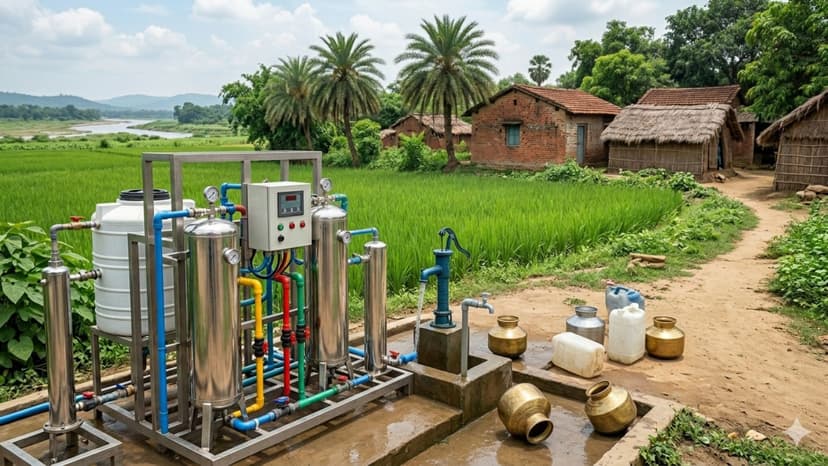
The National Green Tribunal (NGT) has mandated all 28 state governments to implement measures to combat the escalating problem of arsenic and fluoride contamination in groundwater. The Central Ground Water Authority (CGWA) has been directed to oversee and monitor these mitigation efforts across the country.
The NGT's intervention stems from concerns over the health impacts of consuming contaminated water. Arsenic exposure can cause arsenicosis, skin lesions, and cancer, while fluoride contamination adversely affects bone and dental health.
Data presented to the tribunal revealed significant contamination levels in various states. Bihar reported arsenic in 4,709 wards and fluoride in 3,789 wards. West Bengal faces arsenic in eight districts and fluoride in seven, while Uttar Pradesh has contamination in 16 districts each. Karnataka also reported arsenic in 20 villages and fluoride in over 2,083 villages.
Remedial strategies suggested by the CGWA include installing water filtration plants, ion-exchange processes, and reverse osmosis systems. States like Bihar and West Bengal have already installed numerous water purification plants and are implementing piped water supply schemes. Uttar Pradesh is focusing on coverage under the Jal Jeevan Mission.
Leading causes for this contamination include industrial pollution, agricultural practices, and natural geological processes like rock weathering. The CGWA noted that alluvial formations in river basins, particularly the Ganga and Brahmaputra, are primary sources of arsenic contamination in states like Bihar, West Bengal, Assam, and Uttar Pradesh.
