Home / Environment / Newfoundland's Moose: From Hunt to Habitat Balance
Newfoundland's Moose: From Hunt to Habitat Balance
24 Jul
Summary
- Moose were introduced to Newfoundland in 1878 and 1904 for hunting.
- Moose population peaked at 200,000, impacting forests significantly.
- Current management focuses on balancing moose, forests, and people.
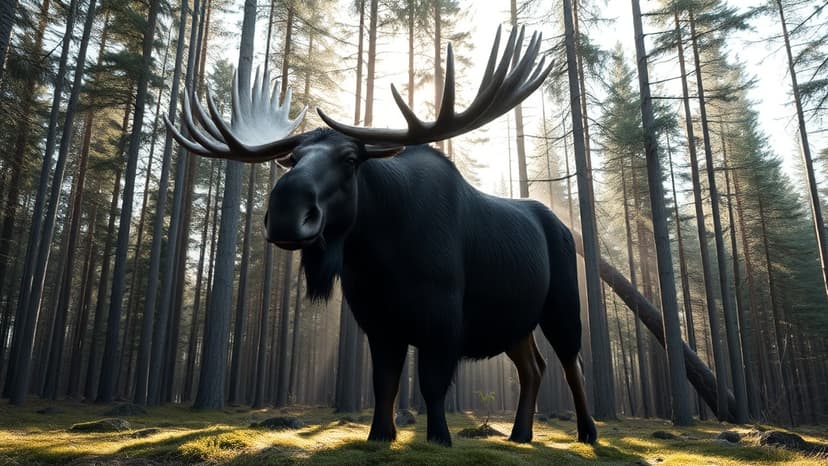
Over a century ago, Newfoundland introduced a small number of moose, aiming to boost hunting opportunities and meat supply. This initiative led to one of North America's largest moose populations, fundamentally transforming the island's forests. The initial releases occurred in 1878 and 1904.
Favorable conditions, including abundant food, a lack of natural predators, and vast forested areas, fueled rapid population growth. By the late 1950s, an estimated 150,000 to 200,000 moose inhabited the island, creating one of the world's highest moose densities.
This high population density led to significant over-browsing, consuming vegetation faster than it could regenerate and impacting forest health. By the early 1970s, the population had declined sharply to below 50,000.
In response, Newfoundland implemented an area-based quota system in 1973 to manage hunting more effectively. This approach helped stabilize populations and allowed habitats to slowly recover.
By the 1990s, moose numbers increased again, surpassing 150,000. However, habitat limitations prompted managers to proactively increase hunting quotas, leading to a less severe decline than in the 1960s.
Currently, the estimated moose population stands at approximately 110,000. The ongoing management goal is to maintain a healthy equilibrium between moose, forests, and human activities, employing scientific monitoring to set appropriate hunting quotas for various management areas.


