Home / Environment / Double Ice Melt Rate Sparks Catastrophic Nepal Flood
Double Ice Melt Rate Sparks Catastrophic Nepal Flood
28 Aug
Summary
- Glacier ice loss in Hindu Kush Himalaya doubled since 2000.
- Flash flood on Nepal-China border killed hundreds.
- Reports warned of increased flood risks from melting glaciers.
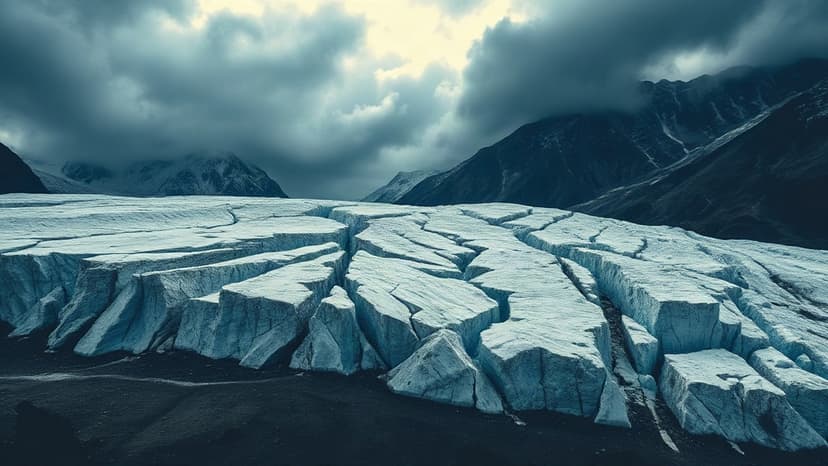
Months before devastating floods struck Nepal and Tibet, ICIMOD released reports warning of escalating flood risks due to rapidly melting glaciers. These March 2026 reports indicated that glacier ice loss across the Hindu Kush Himalaya had doubled since 2000, with smaller glaciers shrinking fastest. This has intensified hazards such as glacial lake outburst floods. Researchers are investigating an ice-rock avalanche from a high-altitude location that triggered a catastrophic flash flood near the Nepal-China border this week, resulting in hundreds of deaths and nearly a thousand missing people.
The ICIMOD analysis, covering 1990-2020, found HKH glaciers lost 12% of their area and 9% of their ice reserves. The Hindu Kush Himalaya holds a significant ice volume outside polar regions, feeding major Asian river systems. Elevated warming is affecting 78% of glacier area between 4,500 and 6,000 meters. The disaster has also formed a temporary dam with potential for a secondary flash flood, prompting the halting of rescue operations in Nepal.
Significant monitoring gaps exist, with major glacierized regions remaining unmonitored. This lack of comprehensive data hinders the understanding of accelerated changes in water flows and cryosphere risks. The Nepal-Tibet disaster underscores the cross-border nature of these hazards, emphasizing the need for regional cooperation and data sharing to better prepare for future events.


