Home / Environment / Mumbai Seeks Lucknow's Waste Solution
Mumbai Seeks Lucknow's Waste Solution
6 Feb
Summary
- Mumbai delegation studies Lucknow's landfill transformation.
- Lucknow reclaimed 38 acres from 17.50 lakh metric tonnes waste.
- Court-ordered study aims to tackle Mumbai's waste and odor issues.
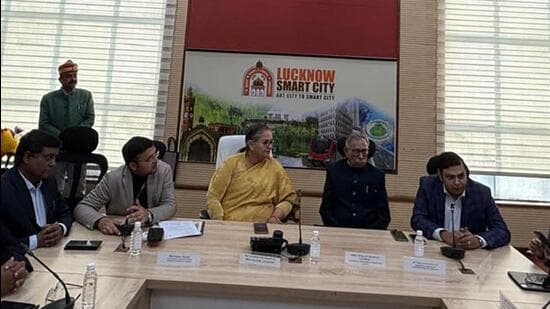
A delegation from Mumbai's civic body is studying Lucknow's waste management success. This visit was prompted by the Bombay High Court's directive following complaints about foul odors from Mumbai's landfills. The court asked the Brihanmumbai Municipal Corporation (BMC) to investigate how Lucknow transformed its Shivri dumpsite into a replicable model.
Lucknow has processed approximately 17.50 lakh metric tonnes of legacy waste, reclaiming 38 acres of land. A private agency, engaged on March 12, 2024, systematically processes accumulated waste. Materials are separated into refuse-derived fuel (RDF), biosoil, and construction debris. Independent agencies like NEERI and VJTI monitor the process for technical compliance.
Lucknow's facility handles 2,000 to 2,200 metric tonnes of daily waste alongside legacy waste, reducing pollution. Mumbai faces a larger challenge, producing 7,000 tonnes of municipal solid waste and 7,000 tonnes of construction and demolition waste daily. While Mumbai uses bioreactor technology for daily waste, odor control remains difficult.
The BMC delegation received presentations and toured Lucknow's plant. Their findings will inform a report to the Bombay High Court. While acknowledging that Lucknow's model cannot be entirely replicated in Mumbai due to scale differences, officials believe several practices can be adapted, emphasizing waste segregation at the source as crucial.