

Home / Environment / Mumbai Coastal Road: Trees vs. Traffic
Mumbai Coastal Road: Trees vs. Traffic
30 Mar
Summary
- Coastal road construction impacts mangroves and heritage trees.
- BMC promises compensation and restoration for affected fisherfolk.
- Projected benefits for 5 million daily commuters are cited.
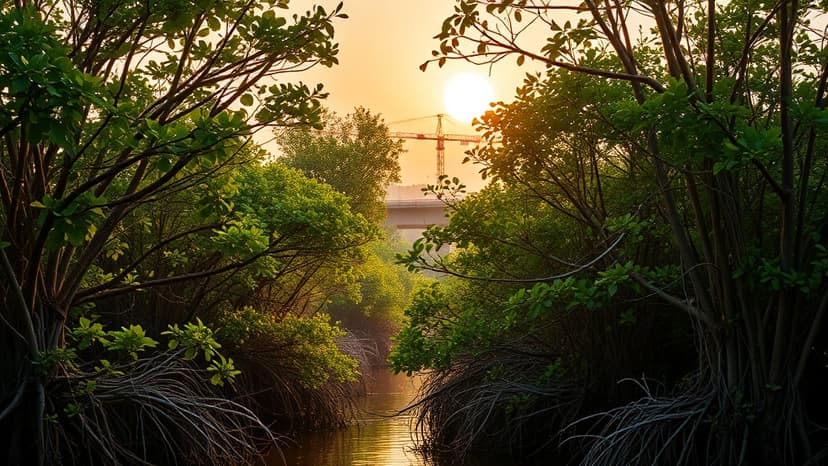
The proposed 23-km Versova-Bhayander coastal road in Mumbai is a subject of controversy, primarily concerning its environmental impact. While the BMC states the road does not directly traverse fishing villages, potential harm to livelihoods from mangrove loss and creek construction is acknowledged.
Authorities are commissioning a socio-economic impact assessment by the Central Marine Fisheries Research Institute to determine compensation and rehabilitation strategies for affected fisherfolk. Despite these plans, some fisherfolk report that construction has commenced while surveys are yet to begin.
The project involves the loss of 103 hectares of mangrove land. The BMC asserts that the road's transport benefits, projected to serve 5 million daily commuters, outweigh ecological costs. This projection is based on regional mobility analysis for the Mumbai Metropolitan Region.
Discrepancies exist regarding environmental assessments, with residents claiming heritage trees will be cut in Nana Nani park, a claim BMC refutes, stating no trees meet heritage criteria. Wildlife clearances were deemed unnecessary as the area is distant from protected national parks and sanctuaries.
Despite affecting protected and reserved mangroves, a restoration plan worth ₹308 crore is in place, including extensive mangrove plantation. However, the success rate of such endeavors is often noted as challenging, with the BMC referencing a past, smaller-scale project as a precedent.
