

Home / Environment / Mediterranean Tsunami Threat: Calm Sea Hides Hidden Dangers
Mediterranean Tsunami Threat: Calm Sea Hides Hidden Dangers
1 Apr
Summary
- Mediterranean Sea faces tsunami risk from earthquakes and landslides.
- Southern Europe's densely populated coasts are particularly vulnerable.
- Scientists predict moderate tsunamis possible in the near future.
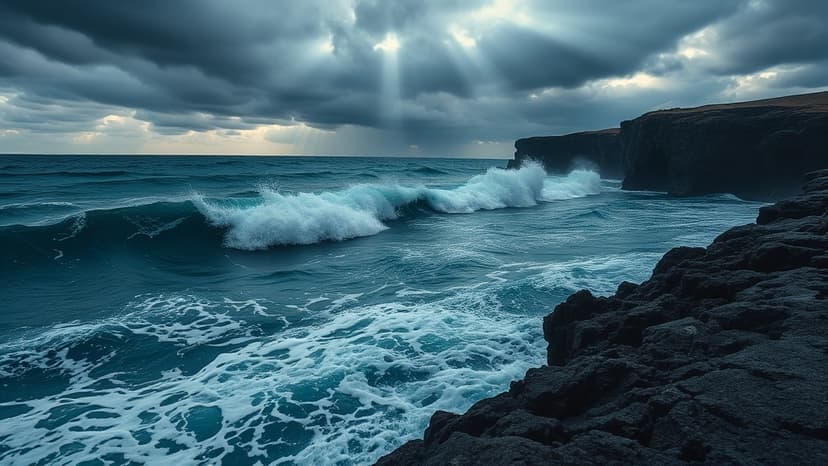
Contrary to popular belief, the Mediterranean Sea is not immune to significant natural calamities like tsunamis. Scientific evaluations reveal that densely populated coastal regions of Southern Europe, including the Côte d'Azur and cities like Nice, face considerable exposure to tsunami risk. This threat stems from geological activities such as earthquakes, underwater landslides, and volcanic eruptions, which are common in the region where tectonic plates converge.
Institutions like the University of Montpellier, in collaboration with UNESCO, have published findings indicating a real possibility of moderate tsunamis occurring in the Mediterranean. Statistical analysis of ongoing geological disturbances, such as frequent underwater earthquakes and landslides, supports predictions of potential waves exceeding one meter in height in the near future. The enclosed nature of the Mediterranean basin can further magnify the impact of such events.
Historical records confirm that tsunamis have indeed occurred in the Mediterranean, affecting areas like the Côte d'Azur through both near-field and far-field triggering mechanisms. Past events have resulted in observable sea level changes and strong currents. Modern risk management strategies now integrate scientific modeling with public preparedness. Cities like Nice are incorporating findings from studies into their urban planning, emphasizing that population readiness is as crucial as early warning systems for effective evacuation.
