Home / Environment / Lonar Lake's Mystery Rise Threatens Ancient Temples
Lonar Lake's Mystery Rise Threatens Ancient Temples
1 Feb
Summary
- Water level surged 15-20 feet, submerging ancient temples.
- Experts debate causes: freshwater springs vs. sewage inflow.
- Bombay High Court ordered a public interest litigation.
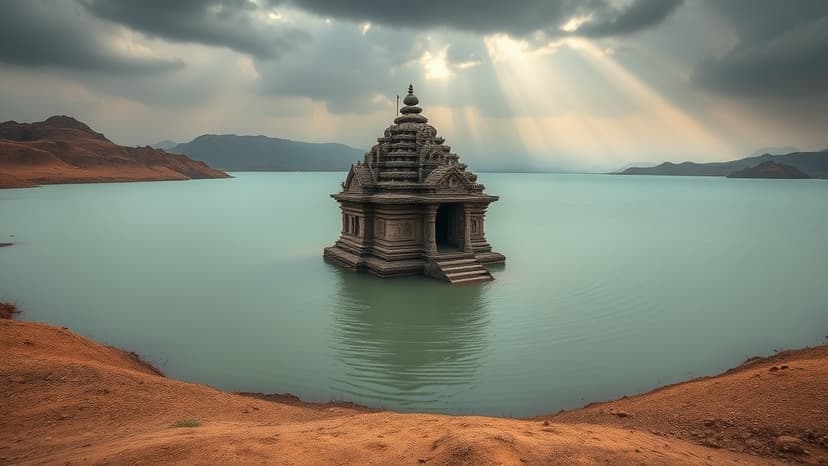
Lonar Lake, a 50,000-year-old meteorite crater, is experiencing a drastic, unexplained rise in its water level. Since September 2025, the water has risen 15-20 feet, partially submerging historic Shiva temples and the Kamalja Devi Temple located on its shores. This development has raised serious concerns among conservationists about the potential impact on the lake's unique biodiversity and geological significance.
The Bombay High Court has initiated a public interest litigation, appointing Mohit Khajanchi as amicus curiae and seeking responses from various state departments. While the exact cause remains scientifically undetermined, experts propose several theories. One suggests sustained freshwater inflow from perennial springs, which could dilute the lake's salinity and alter its delicate chemical balance. Another theory points to sewage inflow, though some question its sufficiency given the scale of the rise. Reports of fish appearing in the lake, previously uninhabitable due to high salinity, further indicate ecosystem disruption.
Environmentalists like Prof Atul Bodkhe stress the need for continuous monitoring and scientific publication, as the springs alone cannot account for such a surge. Retired officer Rajendra Dhongde highlights multiple factors including rainfall, potential percolation from a nearby tank, and past sewage inflow from relocated shanties. He also warns that development near the eco-sensitive zone is weakening the crater's ridge, accelerating erosion. The amicus curiae has suggested emergency water diversion, immediate studies to identify inflow sources, and the establishment of real-time water quality monitoring stations.