Home / Environment / India's Moving Masterpiece: The Floating Loktak Lake
India's Moving Masterpiece: The Floating Loktak Lake
13 Jan
Summary
- Loktak Lake is Northeast India's largest freshwater lake.
- Phumdis, unique floating islands, support huts and vegetation.
- It hosts the world's only floating national park for the sangai deer.
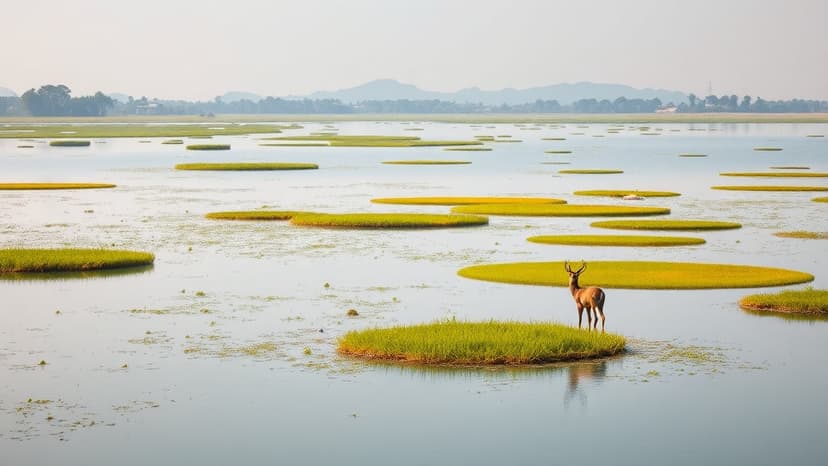
Loktak Lake in Manipur, India's largest freshwater body in the Northeast, is gaining attention for its extraordinary floating landscape. Composed of unique "phumdis"—masses of vegetation and organic matter—these islands drift and change, creating a constantly evolving scenery. This dynamic environment supports local life and agriculture, making the lake central to the region's economy and culture for generations.
The phumdis are not just unique geological features; they are substantial enough to support huts, small farms, and even forested areas. This remarkable characteristic makes possible the existence of Keibul Lamjao National Park, the world's sole floating national park. This park serves as the last natural habitat for the endangered sangai deer, underscoring the ecological significance of Loktak Lake.
Life around Loktak is intrinsically tied to the lake. Fishing communities reside on its shores and on floating settlements, relying on traditional methods for their livelihood. The lake's ecosystem faces pressures from changing water levels and pollution, highlighting the ongoing need for conservation efforts to balance environmental protection with the needs of the local population.