Home / Environment / Lake Powell Nears Crisis: New Ramps and Warnings Issued
Lake Powell Nears Crisis: New Ramps and Warnings Issued
3 Mar
Summary
- New ramp work aims to improve access despite falling water levels.
- Federal projections suggest Lake Powell could hit record low by March 2027.
- Hydropower generation is threatened as lake levels approach minimum thresholds.
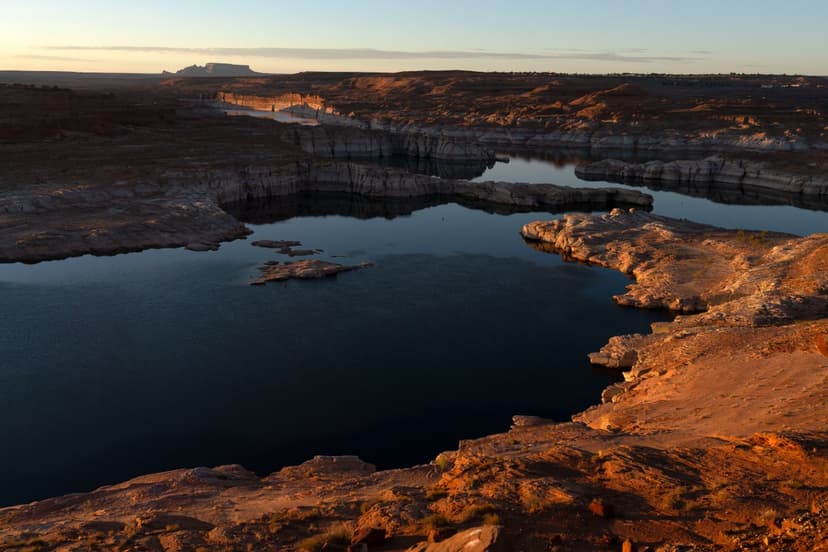
Officials at Glen Canyon National Recreation Area are implementing new ramp projects and issuing warnings about potential summer bottlenecks for boaters at Lake Powell, amid concerning projections for water levels. Recent federal forecasts suggest that Lake Powell could reach a record low elevation by March 2027, exacerbated by decades of drought conditions. As of March 1, 2026, the lake's elevation was 3,530.89 feet, with federal data from late February showing it at only 24 percent capacity.
To mitigate impacts, the National Park Service (NPS) is finalizing plans for long-term ramp functionality at lower lake elevations, with construction extending beyond summer 2026. Temporary solutions include extending the Stateline Auxiliary Ramp and developing a temporary North Wash ramp for river rafters. Boaters are advised to expect increased congestion, particularly at the Stateline Auxiliary Ramp, and to allow extra time for launching and retrieval.
Beyond recreational access, the declining reservoir levels have significant implications for regional energy production. Hydropower output from Glen Canyon Dam is dependent on sufficient lake elevation. Updated federal projections indicate that Lake Powell could fall below the minimum power pool—the threshold for electricity generation—as early as December 2026, highlighting the multifaceted challenges posed by the ongoing drought.