

Home / Environment / Sensor Buoys Transform Lake Erie into Digital Water Hub
Sensor Buoys Transform Lake Erie into Digital Water Hub
13 Apr
Summary
- Lake Erie is becoming the world's largest digitally connected freshwater body.
- Hundreds of sensor buoys are deployed to monitor water quality in real-time.
- Efforts aim to address pollution from industrial, agricultural, and residential sources.
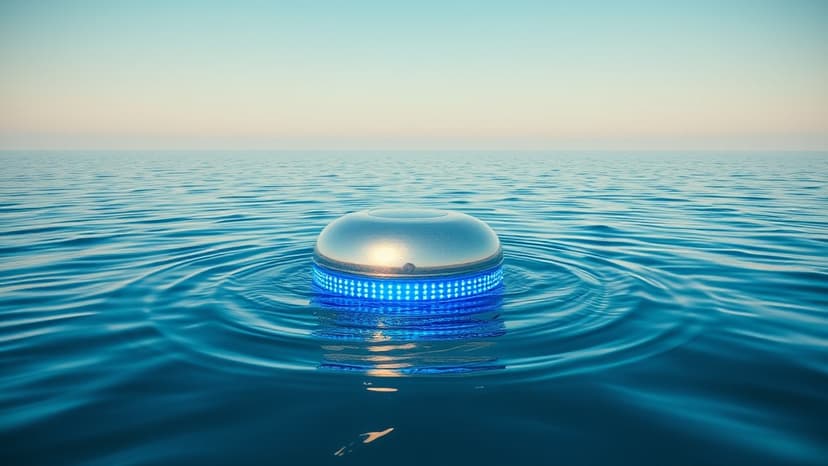
Lake Erie is undergoing a significant transformation, evolving from a historical dumping ground for pollutants into the world's largest digitally connected freshwater body. Hundreds of sensor buoys are being deployed across the western section of the lake, providing real-time data on wave height, contaminant levels, and more than a dozen other water-related factors across 7,750 square miles.
This initiative, spearheaded by organizations like the Cleveland Water Alliance, aims to address persistent water quality issues stemming from industrial waste, agricultural runoff, and urban development. Researchers are monitoring E coli, algal blooms, and turbidity, while also developing technologies to capture microplastics and improve water treatment methods.
The project positions Lake Erie as a critical testbed for innovative water technologies. Efforts are underway to develop solutions for wintertime monitoring and to mitigate pollution from sources like phosphate-rich agricultural runoff and industrial discharge, such as that from Campbell's soup plant.
This ambitious project seeks to leverage Lake Erie's status as a vital natural asset. By creating a platform for global collaboration and technological advancement, the initiative aims to develop deployable clean water solutions applicable worldwide, addressing increasing water demand and ensuring better water quality for millions.
