feedzop-word-mark-logo
searchLogin
Feedzop
homeFor YouIndiaIndia
You
bookmarksYour BookmarkshashtagYour Topics
Trending
Terms of UsePrivacy PolicyAboutJobsPartner With Us

© 2026 Advergame Technologies Pvt. Ltd. ("ATPL"). Gamezop ® & Quizzop ® are registered trademarks of ATPL.

Gamezop is a plug-and-play gaming platform that any app or website can integrate to bring casual gaming for its users. Gamezop also operates Quizzop, a quizzing platform, that digital products can add as a trivia section.

Over 5,000 products from more than 70 countries have integrated Gamezop and Quizzop. These include Amazon, Samsung Internet, Snap, Tata Play, AccuWeather, Paytm, Gulf News, and Branch.

Games and trivia increase user engagement significantly within all kinds of apps and websites, besides opening a new stream of advertising revenue. Gamezop and Quizzop take 30 minutes to integrate and can be used for free: both by the products integrating them and end users

Increase ad revenue and engagement on your app / website with games, quizzes, astrology, and cricket content. Visit: business.gamezop.com

Property Code: 5571

Home / Environment / Koala Paradox: Starving in South, Thriving to Death North

Koala Paradox: Starving in South, Thriving to Death North

18 Jan

•

Summary

  • Koalas face overpopulation in southern Australia, risking starvation.
  • Northern states list koalas as endangered due to habitat loss.
  • Fertility control is proposed as a costly but effective solution.
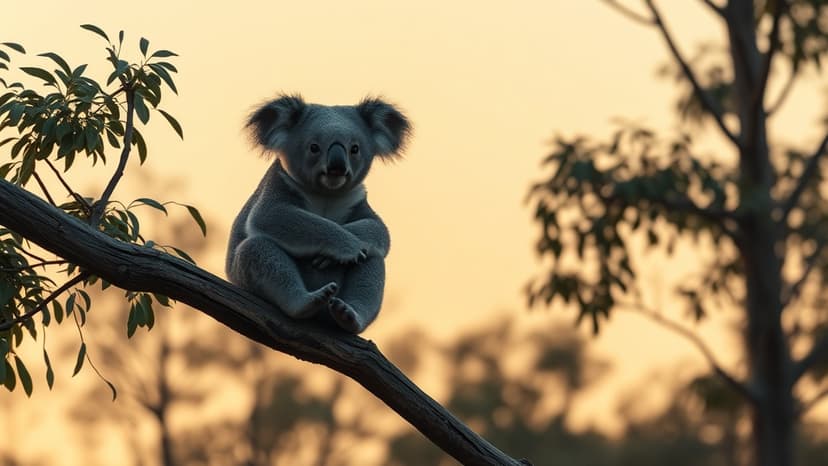
Koala Paradox: Starving in South, Thriving to Death North

Australia's koala population is divided into two crises: overpopulation in the south and decline in the north. On French Island, koalas are eating eucalypts bare, leading to starvation, a situation mirrored in South Australia's Mount Lofty Ranges. This overabundance, a result of introduced populations thriving in favourable conditions, threatens the koalas' long-term survival.

Conversely, koalas in Queensland, New South Wales, and the ACT are listed as endangered. These populations have plummeted due to extensive land-clearing, habitat fragmentation from urban development, disease, and direct threats like vehicle strikes and dog attacks. Since 2011, nearly 2 million hectares of suitable koala habitat have been destroyed, predominantly in Queensland.

Addressing these contrasting issues requires a multifaceted approach. While culling is banned and translocation is costly, fertility control, such as sterilizing adult females, is being explored as a more cost-effective strategy for overabundant southern populations. Ultimately, landscape-scale habitat restoration is seen as crucial for the species' sustainability across the country.

trending

Indigo flight bomb threat

trending

iPhone 18 Pro details leaked

trending

India squad for Australia tour

trending

Maruti Suzuki invests ₹35,000 crore

trending

Warriorz wear pink WPL jersey

trending

Kohli hits 85th hundred

trending

WPL 2026: UPW vs MI

trending

Bangladesh asks ICC swap groups

Disclaimer: This story has been auto-aggregated and auto-summarised by a computer program. This story has not been edited or created by the Feedzop team.
Favourable conditions like rainfall, temperature, and soil acidity boosted habitat suitability, allowing the koala population in Mount Lofty Ranges to thrive.
Habitat loss due to land-clearing and urban development is the primary threat to koalas in New South Wales.
Fertility control, like sterilizing adult females, is a proposed long-term strategy to stabilize overabundant koala populations.

Read more news on

Environmentside-arrowAustraliaside-arrowNew South Walesside-arrowSouth Australiaside-arrow

You may also like

Rare Marsupial Spotted After 90 Years in Queensland

6 Jan • 62 reads

article image

Australia Swelters as Koala Numbers Soar!

14 Dec, 2025 • 187 reads

article image

NSW Koalas Higher Than Thought: New Survey Tech Used

11 Dec, 2025 • 181 reads

article image

Oysters Rise Again: SA's Reefs Roar Back to Life

9 Dec, 2025 • 206 reads

article image

NSW Scorches: First Summer Heatwave Hits

5 Dec, 2025 • 266 reads

article image