Home / Environment / Dishwashing's Dirty Secret: Water, Not Sponges, Pollutes
Dishwashing's Dirty Secret: Water, Not Sponges, Pollutes
24 Mar
Summary
- Kitchen sponges release microplastics during use, study finds.
- Water consumption is the primary environmental burden of dishwashing.
- Plant-based, degradable sponges and reduced water use are recommended.
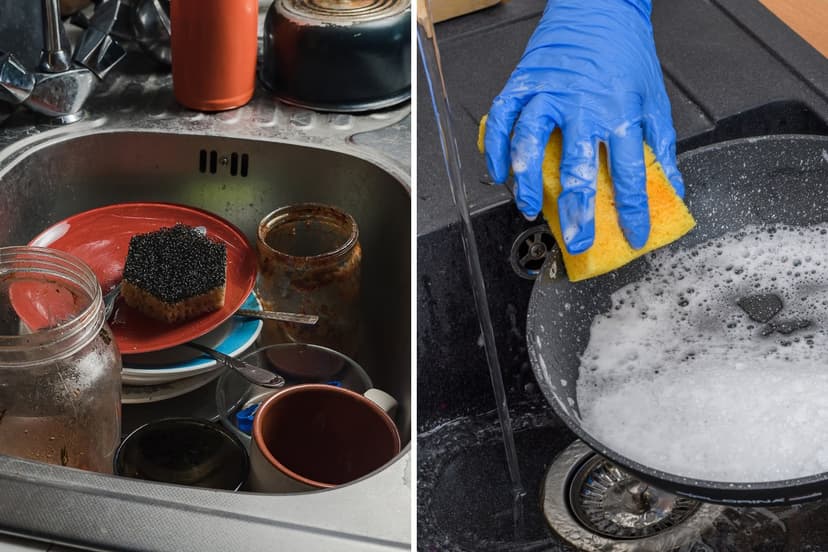
New research indicates that while kitchen sponges contribute to microplastic pollution, the most significant environmental impact of manual dishwashing is water consumption. A study involving households in Germany and North America quantified microplastic release from sponges, finding that amounts varied by sponge type, ranging from approximately 0.68 to 4.21 grams per person annually.
Despite these findings, the study determined that microplastic release accounts for only a small fraction of the overall environmental burden. Water usage, conversely, is responsible for an estimated 85 to 97 percent of the total impact. Experts recommend choosing plant-based, degradable sponges and consciously reducing water consumption to mitigate environmental damage.