Home / Environment / Kerala Forest Dept. Profiles Elephants Amidst Rising Conflict
Kerala Forest Dept. Profiles Elephants Amidst Rising Conflict
26 Jul
Summary
- Forest department is profiling elephants that repeatedly enter settlements.
- Radio collars will be used to track specific problem elephants.
- Conflict incidents peak during early monsoon months of July and August.
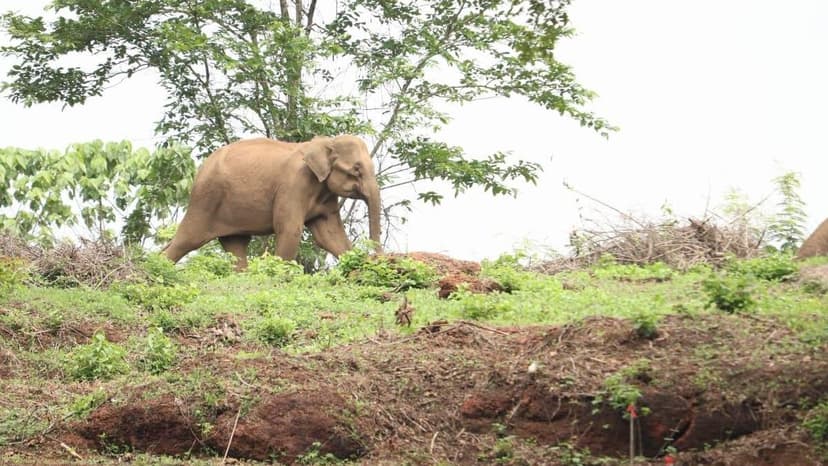
In response to escalating human-wildlife conflicts in north Kerala, the Forest department has begun profiling individual elephants that repeatedly enter human settlements. This operational measure aims to understand the movement patterns of these animals, especially in areas like Aralam, which experience frequent intrusions.
Rapid Response Teams are documenting these elephants through photographs and videos, noting that some animals exhibit predictable behavior, such as entering settlements between 2 a.m. and 4 a.m. to feed before returning to the forest. A specific tusker, KM1, known for entering the Aralam farm region, will be fitted with a radio collar after tranquilization.
Data collected over several years indicates that wildlife intrusions into settlements consistently peak during the early monsoon months of July and August, even when forests have ample food and water. These observations are logged by the Divisional Forest Emergency Operations Centre.
The department is also considering a request to the Centre of Excellence for Human-Wildlife Conflict Studies for a carrying capacity study in the Wayanad landscape. This scientific assessment would investigate concerns that the Wayanad region, connected to other major forest areas, may be supporting a wildlife population beyond its sustainable capacity.
This profiling exercise focuses on elephants causing problems or exhibiting aggressive behavior, providing insights into their actions and routes. The potential carrying capacity study would scientifically verify assumptions about overpopulation in the Wayanad landscape.


