Home / Environment / Karnataka Tigers: Overcrowded Reserves or Natural Dispersal?
Karnataka Tigers: Overcrowded Reserves or Natural Dispersal?
15 Feb
Summary
- National Tiger Conservation Authority (NTCA) analysis challenges overcrowding claims.
- Tiger populations in key reserves are within estimated carrying capacities.
- NTCA advises against routine tiger captures, recommending monitoring instead.
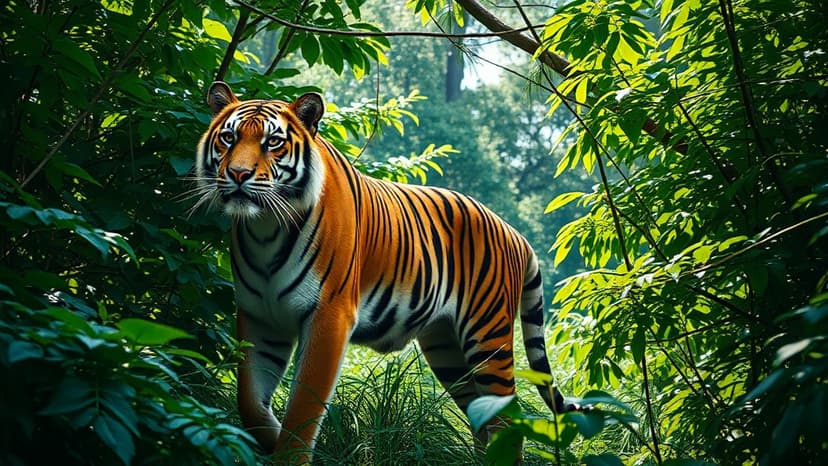
The debate over the carrying capacity of Karnataka's tiger reserves has resurfaced due to a recent spike in human-wildlife conflict. Forest officials previously attributed increased tiger-human interactions to reserves exceeding their capacity, citing tiger population growth in areas like Bandipur. However, a National Tiger Conservation Authority (NTCA) analysis of data from Bandipur, Nagarahole, and BRT reserves found that tiger populations are currently within their estimated carrying capacities.
NTCA's review, prompted by an unusual rise in tiger captures between September and December 2025, concluded that these reserves can scientifically sustain more tigers than currently present. Specifically, Bandipur could accommodate an additional 119 tigers, Nagarahole 35, and BRT 34. The authority cautioned against routine captures, suggesting that occasional dispersal is a natural process.
Instead of immediate capture, NTCA recommended intensified monitoring and conflict-mitigation measures in accordance with national guidelines. They urged a comprehensive examination of ecological data and long-term conservation objectives to ensure science-based and sustainable tiger management in Karnataka.