Home / Environment / JNU Sewage Lake Breeds Health, Wildlife Fears
JNU Sewage Lake Breeds Health, Wildlife Fears
7 Mar
Summary
- A kilometer-long sewage water accumulation poses health risks.
- Contamination flows from damaged lines near residential areas.
- Damaged boundary wall allows unauthorized campus access.
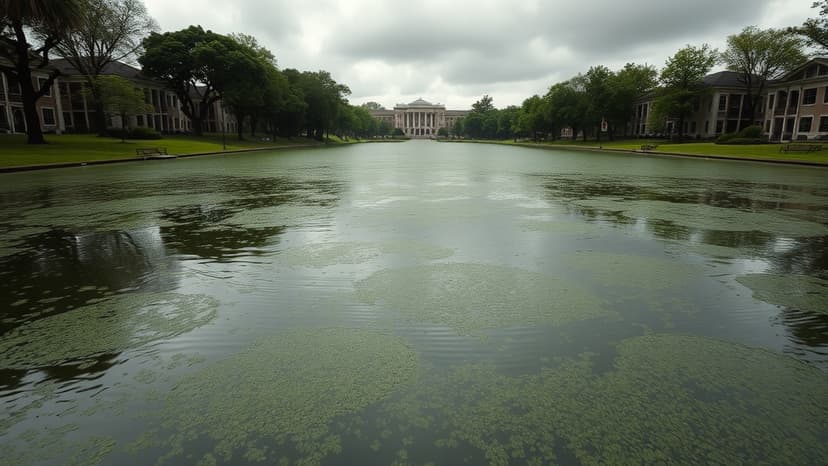
A significant environmental concern has emerged at Jawaharlal Nehru University (JNU) with the development of a kilometer-long, lake-like stretch of sewage water on its premises. This contamination, stemming from a damaged sewage line connected to adjacent residential areas, is flowing into the campus and accumulating in a low-lying area that previously served as a rainwater catchment.
Officials have reported that this issue has persisted for approximately five years, with repeated appeals to civic agencies like the Delhi Jal Board (DJB) yielding only temporary solutions. The stagnant, murky water emits a strong odor, impacting the daily lives of students and residents and posing a potential threat to the health of both humans and the diverse wildlife inhabiting the university's extensive forest cover.
Further inspection of the JNU campus forest revealed additional concerns. These include unauthorized cattle rearing from a nearby village, the illegal dumping of construction and demolition waste, and a damaged boundary wall with an abandoned guard post, which facilitates easier access for outsiders and allegedly contributes to illegal activities within the forest.
Authorities stated that contractors are responsible for transporting construction debris to designated disposal sites outside the university. The issue of waste dumping within the ridge area has been a subject of past scrutiny, with a previous National Green Tribunal case in 2016. While the forest department plans to inspect non-forestry activities, responses from the Delhi Development Authority (DDA), Municipal Corporation of Delhi, and DJB regarding ongoing issues remain unaddressed.