Home / Environment / Jammu & Kashmir: Birds Take Flight as Eco-Tourism Hubs Bloom
Jammu & Kashmir: Birds Take Flight as Eco-Tourism Hubs Bloom
30 May
Summary
- J&K boasts nearly 600 bird species across diverse habitats.
- Restoration efforts at Wular Lake include eco-parks and walkways.
- Bird-based tourism promises sustainable livelihoods for local communities.
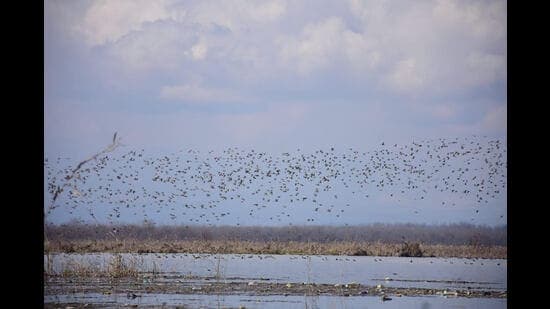
Jammu and Kashmir is actively developing its avian sanctuaries into vibrant eco-tourism destinations, capitalizing on its rich biodiversity that includes nearly 600 recorded bird species. Major conservation and infrastructure projects are underway across the union territory's wetlands, forests, and alpine habitats. Efforts at Wular Lake involve replacing roads with non-motorable walkways and developing eco-parks to protect the delicate ecosystem. Similar upgrades are being implemented at Dachigam National Park and the Hokersar wetlands. These initiatives aim to transform these natural areas into sustainable birdwatching and eco-tourism hubs.
The development of bird-based tourism is seen as a crucial strategy for economic growth and ecological preservation. Officials highlight that avian conservation is indispensable for sustaining biodiversity, ensuring ecosystem stability, and strengthening climate resilience in the region. By attracting birdwatchers, photographers, and researchers, J&K aims to create sustainable livelihood opportunities for local communities while simultaneously incentivizing habitat conservation. Environmentalists emphasize that the unique species found in J&K can serve as a significant attraction for tourists, adding value to the region's tourism sector and promoting Kashmir's natural heritage on a global scale.


