Home / Environment / South American Moth Invades US Cactus Lands
South American Moth Invades US Cactus Lands
23 Aug
Summary
- Invasive moth released in Caribbean now threatens US native cacti.
- Larvae consume cacti from the inside, leaving them hollow and dead.
- Efforts to slow spread include sterile males and monitoring traps.
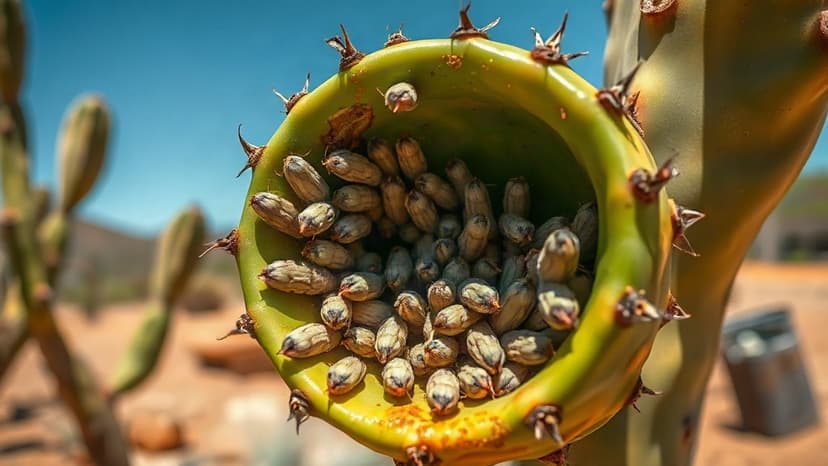
An invasive South American moth, Cactoblastis cactorum, initially released in the Caribbean as a biological control agent, is now spreading across the southern United States. Detected in Florida in 1989, it has since established breeding populations along the Gulf Coast into Texas. The moth's larvae are particularly destructive, feeding on prickly pear cacti from the inside, causing pads to become hollow and eventually leading to plant death. This poses a serious risk to native cactus species and the ecosystems they support.
The species gained notoriety in the mid-20th century for its effectiveness in controlling invasive prickly pear in Australia. Its subsequent spread to Caribbean islands and then Florida highlights its invasive potential. Scientists are concerned about its impact on the fragile ecosystems of the southwestern US and Mexico, where prickly pear is crucial for erosion control and wildlife sustenance. It also threatens Mexico's significant nopal crop, vital for food and commerce.
To combat the spread, agencies are employing methods such as the Sterile Insect Technique, releasing sterilized male moths to reduce viable offspring. Monitoring through pheromone traps and inspections is also in place. Additionally, research into natural predators is ongoing. Public awareness campaigns urge nurseries and gardeners to check for signs of infestation to prevent accidental transport into new areas.


