Home / Environment / Big Rains Mean Less Water: Study Finds Paradox
Big Rains Mean Less Water: Study Finds Paradox
14 May
Summary
- Intense rainstorms are increasing due to global warming.
- More intense deluges lead to less water availability on land.
- Major river basins face drying due to concentrated rainfall.
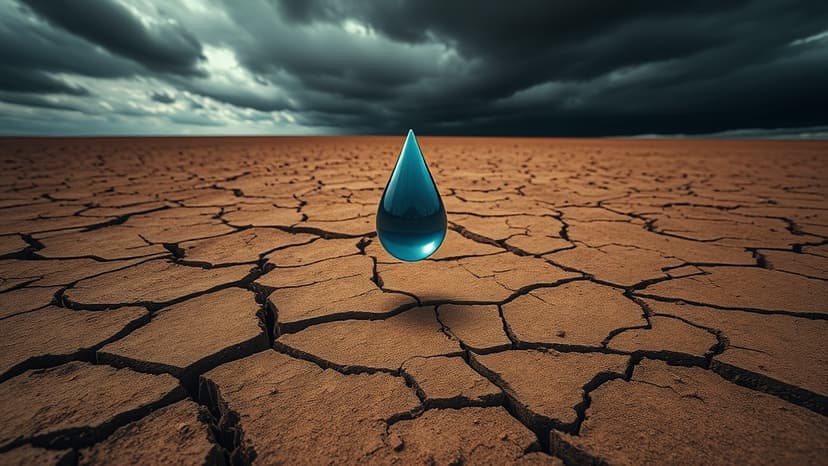
Climate researchers have documented a significant trend: intense rainstorms are becoming more frequent as the world warms. However, a recent study published in Nature reveals a counterintuitive consequence of these larger storms.
According to the findings, the more rain that falls in concentrated deluges, the less water remains available on land. This phenomenon is attributed to hotter air holding more moisture, leading to less regular but more intense rainfall events.
When rain falls heavily in fewer, spaced-out events, the ground struggles to absorb it. Water pools on the surface, evaporates quickly, or runs off before it can replenish aquifers or sustain plant life. This is compounded by longer dry periods that increase surface evaporation.
Major global river basins, including the Amazon, Nile, Mississippi, Ganges, and Yangtze, are already experiencing drying due to this shift. The study utilized a method inspired by the Gini coefficient to measure the concentration of rainfall, finding this effect occurs across all climates.
By the time the Earth's average temperature rises by 2 degrees Celsius, an estimated 27% of the human population could be living under abnormally dry conditions as a direct result of these altered rainfall patterns. The Earth's average temperature has already increased by approximately 1.3 degrees Celsius since industrialization.


