

Home / Environment / Indigenous Communities Own Solar Future
Indigenous Communities Own Solar Future
26 Apr
Summary
- Remote communities are adopting solar microgrids for energy self-determination.
- The Aalga Goorlil project aims to meet 80% of power needs with renewables.
- Renewable projects offer energy security and cost savings for households.
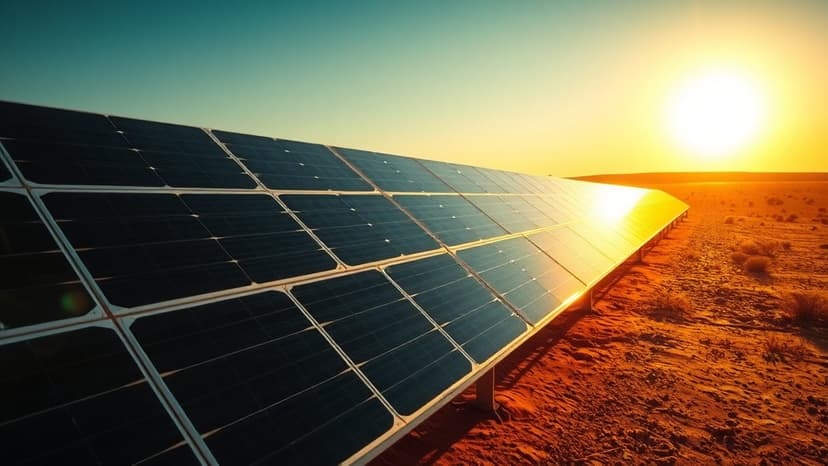
Remote Australian communities are increasingly embracing solar microgrids to achieve energy self-determination. In Djarindjin, the 'Aalga Goorlil' project, meaning 'sun turtle,' is planned to significantly reduce the community's dependence on government-supplied diesel generators, aiming to meet 80% of its power needs through renewable energy. This initiative reflects a growing desire for energy independence among Indigenous populations.
Similar progress is evident in the Northern Territory, where the Ngardara Solar Microgrid project in Borroloola received $8.3 million in federal funding. This project will establish a solar array and battery system expected to cover 80% of the community's energy demand, saving approximately 1.2 million liters of diesel annually. Households in Borroloola are projected to save up to 50% on electricity bills, with the initiative also including local job development programs.
Further south, Ltyentye Apurte (Santa Teresa) near Alice Springs is also set to benefit from a new microgrid, scheduled for construction starting in March 2027. While this project won't achieve full renewable transition, it will improve power reliability and offer small monthly savings on electricity bills. The surplus energy generated can be sold back to the grid, creating community income and enhancing economic security.
These community-led energy developments are recognized as critical for improving energy security and affordability in remote areas. Beyond reliable and clean energy, they foster local training and employment opportunities, contributing to the overall resilience and economic well-being of these communities, especially in the face of climate-related disruptions like cyclones and floods.
