Home / Environment / Tigers, Cheetahs Return: Can India's Wildlife Thrive Unassisted?
Tigers, Cheetahs Return: Can India's Wildlife Thrive Unassisted?
16 Oct
Summary
- Tigress reintroduced in Buxa Tiger Reserve, West Bengal.
- Cheetahs reintroduced in Madhya Pradesh as part of Project Cheetah.
- Experts debate wildlife's ability to thrive with limited human intervention.
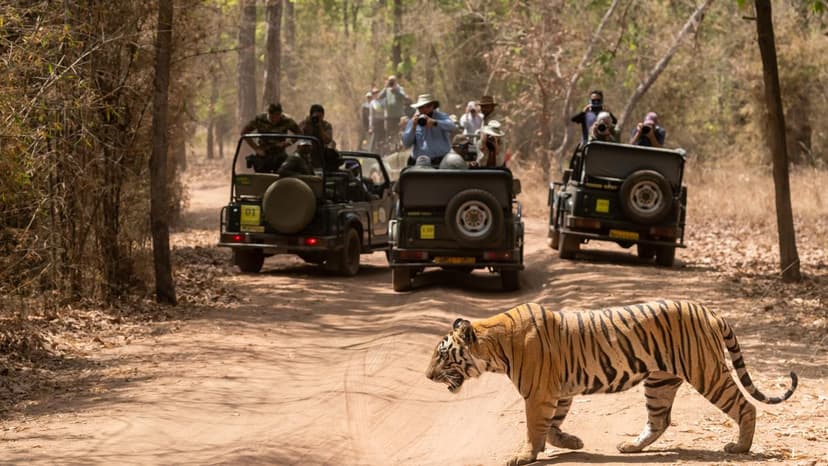
India is embarking on a phased reintroduction of tigers in the Buxa Tiger Reserve, West Bengal, with a three-year-old tigress released on October 2nd. This initiative follows the 2022 reintroduction of cheetahs in Madhya Pradesh. These bold steps raise a fundamental question about the capacity of India's wildlife to thrive with reduced human intervention.
Experts Qamar Qureshi and Uma Ramakrishnan explored conservation history, noting India's shift from an agrarian, nature-integrated past to a post-colonial era managing traditional and Western influences. They highlighted that conservation is not exclusive to wealthy nations, citing examples like Costa Rica and Brazil.
Conservation science in India uses flagship species like the tiger to garner public and political support, though this doesn't always benefit all species within an ecosystem. Active management is increasingly vital due to human impact on natural systems, necessitating nuanced approaches beyond conventional protected areas.
Interventionist conservation, including captive breeding and reintroduction, may be crucial for preventing extinctions, though success varies. Protecting extensive landscapes is essential, given the current limited coverage of protected areas and the vast unknowns in biodiversity. However, conservation must integrate local communities rather than alienating them.
To enhance conservation, India's Wildlife (Protection) Act requires reform, moving from a punitive framework to one that actively facilitates scientific research and diverse participation. This shift is vital for improving wildlife biology and conservation science across the country.


