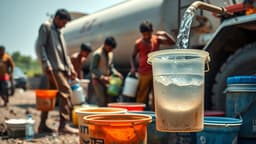
Home / Environment / Every Drop Counts: India's Massive Water Conservation Drive
Every Drop Counts: India's Massive Water Conservation Drive
20 Mar
Summary
- India faces water scarcity with 18% population and 4% freshwater.
- Jal Jeevan Mission provides tap water to over 15.8 crore households.
- 45 lakh water conservation structures built since September 2024.
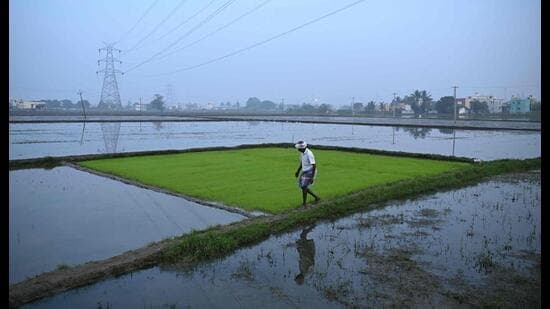
World Water Day highlights India's commitment to water conservation, a vital resource for life and economy. With 18% of the global population and just 4% of freshwater, India faces rising pressures from urbanization and climate change, making efficient water management a national priority.
The government has adopted an integrated approach, consolidating water management under a single ministry. This strategy spans conservation, groundwater recharge, storage enhancement, river interlinking, and improved access through initiatives like the Jal Jeevan Mission.
The Jal Jeevan Mission, the world's largest drinking water program, has connected over 15.8 crore rural households to tap water. This has significantly improved quality of life, especially for women, by reducing water fetching burdens and enhancing health outcomes.
Community participation is central to water security. The Jal Shakti Abhiyan, inspired by the "catch the rain" call, has seen communities build over 45 lakh water conservation structures since September 2024, demonstrating successful large-scale public involvement.
Examples of this public-private partnership are emerging across India, with cooperatives, farmers, and urban societies adopting water-saving practices. Industry and agriculture are also key players, implementing water audits, recycling, and micro-irrigation techniques for greater sustainability.
Achieving water security requires a collective national endeavor, moving beyond awareness to daily action. Conserving even one liter per person can yield a significant national impact, fostering a culture where every drop is valued for a water-secure India.