Home / Environment / India's Flood Fix: Money Spent, But Cities Still Drown
India's Flood Fix: Money Spent, But Cities Still Drown
20 Jul
Summary
- Urban floods stem from more than just rainfall; planning, drainage are key.
- Billions spent on flood mitigation show recurring floods persist.
- Audit delays mean failures are identified years after the fact.
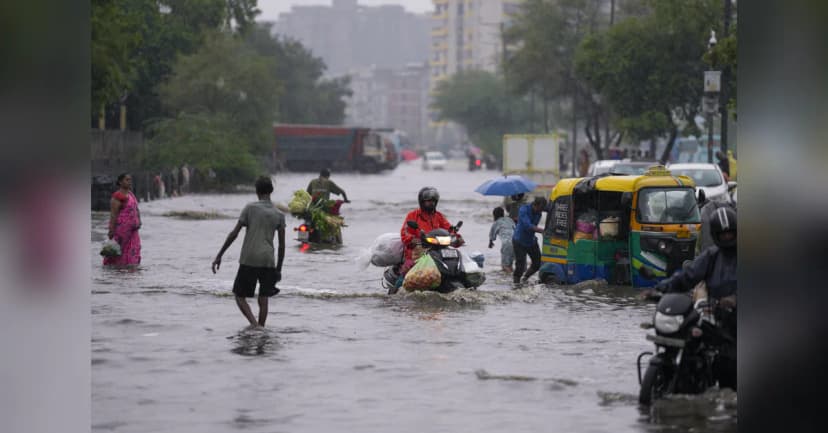
Intense rainfall often leads to widespread urban flooding in India, disrupting daily life and infrastructure. While the Union government points to high-intensity rainfall, it also acknowledges that unplanned urbanization, encroachment on water bodies, and inadequate drainage systems significantly worsen the problem.
Over the past decade, substantial funds have been allocated through schemes like AMRUT and the Smart Cities Mission for urban flood management. However, recurring flooding indicates that simply spending money is insufficient. Projects need to be planned for current rainfall patterns, properly maintained, and subjected to timely, independent audits.
The government views urban flooding as both a weather event and an urban planning challenge. Responsibility for infrastructure management lies primarily with state governments and local bodies. Notably, a central database for urban flooding incidents is not maintained, hindering effective assessment of flood mitigation efforts.
Recent audits by the Comptroller and Auditor General (CAG) have highlighted systemic failures. For instance, audits in Bengaluru and Chennai revealed discrepancies in planning, incomplete works, and inadequate design capacities. A Delhi Jal Board audit found untreated sewage discharged into stormwater drains, compromising system integrity.
Former director general of audit Seshkumar P emphasized that the issue is not a lack of technical guidance or funding but rather implementation and accountability. He suggested that audits should be conducted much earlier, ideally within six months of an event, to be more effective.
Ultimately, until cities transparently disclose design specifications, maintenance records, and proof of reduced flooding, completion figures will reflect construction activity rather than genuine urban resilience.


