Home / Environment / Pollution Test Tech Ignored for Delhi Air
Pollution Test Tech Ignored for Delhi Air
19 Mar
Summary
- Remote sensing devices offer accurate on-road vehicle emission monitoring.
- India has awaited implementation of this technology since 2026.
- Remote sensing can identify high polluting vehicles effectively.
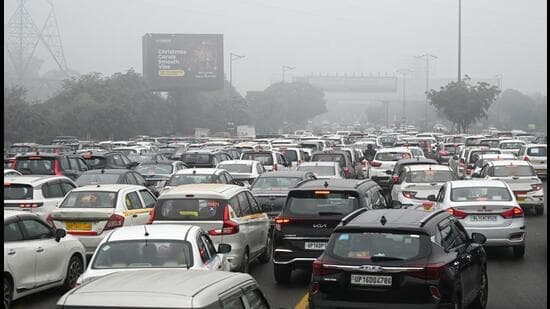
Vehicular emissions are a primary driver of air pollution in India's National Capital Region (NCR). In January 2026, the Commission for Air Quality Management (CAQM) presented urgent recommendations to the Supreme Court for combating this issue. The Court mandated an action plan for immediate implementation.
One key recommendation is the use of remote sensing devices (RSDs) to monitor on-road vehicle pollution. Despite multiple Supreme Court interventions since 2017, this technology remains unimplemented. India's current Pollution Under Control (PUC) system fails to measure PM2.5, a critical pollutant impacting public health.
Remote sensing technology, utilizing absorption spectroscopy, offers a fast, non-intrusive method for accurately measuring exhaust pollutants in real-world conditions. Developed in the US and deployed globally, it has been independently tested and validated by Indian bodies like ARAI and the International Centre for Automotive Technology (ICAT) since the early 2000s.
Studies in Delhi, Gurugram, and Kolkata have confirmed RSD's accuracy and operational viability in Indian settings. A 2023-24 study highlighted its use for market surveillance and exposed higher real-world emissions than laboratory tests. The National Physical Laboratory also verified its accuracy in 2024.
Despite inclusion in the National Clean Air Programme (NCAP) in 2019 and draft guidelines by the Ministry of Road Transport and Highways (MoRTH) in 2020, finalization and implementation are pending. The CAQM's January 2026 recommendation underscores the urgent need for MoRTH to finalize guidelines and deploy RSDs to improve air quality in Delhi NCR.