Home / Environment / Sinking Shores: Fishermen Battle Treacherous 'Silky Clay'
Sinking Shores: Fishermen Battle Treacherous 'Silky Clay'
29 Dec, 2025
Summary
- Fishermen struggle with sinking shores of silky clay.
- A ₹132-crore project lost most breakwater stones to sinking.
- Policy shift from capture fishing to aquaculture impacts maintenance.
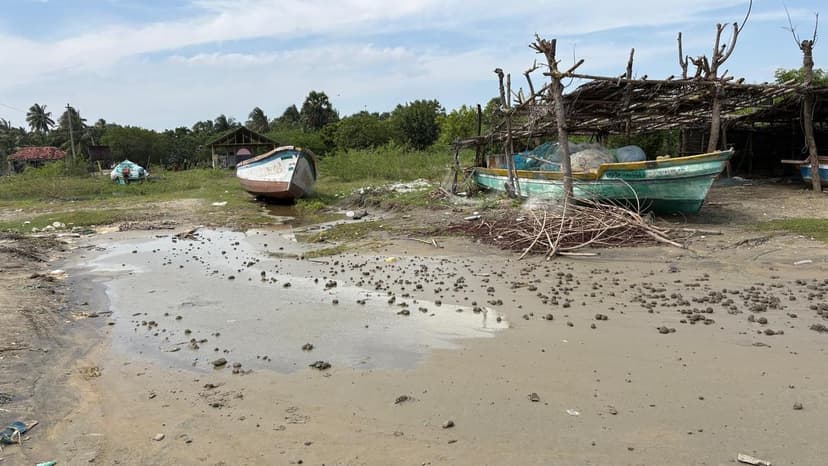
Coastal communities in Vellapallam, Pushpavanam, and Vanavan Mahadevi are grappling with a unique geological crisis. Treacherous 'silky clay' is engulfing their shorelines, transforming the sea into a daily obstacle for the 1,270 families who depend on it. The sandy beaches characteristic of the Coromandel coast are absent here, replaced by a quagmire that drains fishermen's energy and earnings. Daily boat launches now require costly tractor assistance, pushing many into debt when catches are low.
This geological oddity, attributed to sediment discharge from the Vennar Basin, creates a shallow gradient where fine clay accumulates and lacks structural integrity. Experts note this phenomenon is unique to this deltaic coast stretch. Efforts to mitigate the issue have proven costly and largely unsuccessful; a ₹132-crore breakwater project at Vellapallam has lost approximately 70% of its massive stones, sinking into the seabed. A revised estimate for an additional ₹100 crore is under consideration.
Coastal activists argue that a policy shift towards aquaculture over traditional capture fishing, starting around 2014, has led to neglected basic maintenance, including vital bar-mouth dredging. This has disrupted the natural balance of the shore. While a senior Fisheries Department official suggests a more effective breakwater could arrest sand movement, ongoing bureaucratic deliberations leave these fishing villages in a precarious state, awaiting solutions as the sea continues to claim the land.