Home / Environment / India's Climate Shift: South Wets, North Dries
India's Climate Shift: South Wets, North Dries
28 Oct
Summary
- Hot, dry climate zone in peninsular India nearly halved since 1951.
- Southern India is experiencing increased rainfall, becoming wetter.
- Northwestern India sees an expansion of the hot semi-arid climate zone.
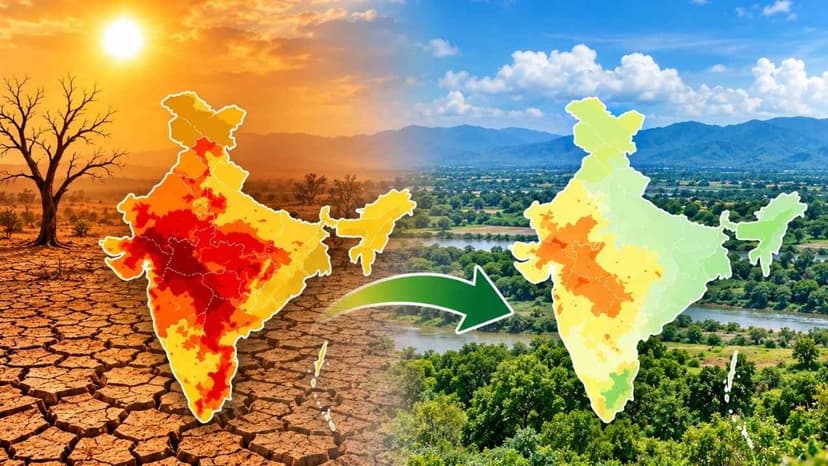
A study by the India Meteorological Department (IMD) and Indian Institute of Tropical Meteorology indicates a major climate transformation across India. The hot, dry climate zone in peninsular India has significantly decreased, shrinking from approximately 30% to 16% between 1951-1980 and 1991-2020.
Researchers attribute this shift primarily to increasing rainfall in southern India, which has led to the tropical savannah climate zone now covering about three-quarters of the peninsula. This contrasts with northwestern India, where the hot semi-arid zone has expanded.
While temperatures have risen nationwide, southern India's increased rainfall contrasts with declining precipitation in the north. Despite this long-term trend, the latest monsoon season saw deficits due to El Niño, with Karnataka experiencing a 30% shortfall and other southern states facing deficits between 17% and 24%.
These deficits resulted in drought declarations in numerous taluks of Karnataka and parts of Andhra Pradesh and Telangana. Experts emphasize the importance of considering both long-term climate shifts and year-to-year variations for effective seasonal forecasting and advisories to farmers.


