Home / Environment / Air Quality Crisis: Industry's Dirty Secret Revealed
Air Quality Crisis: Industry's Dirty Secret Revealed
11 Feb
Summary
- PM2.5 pollution stems from industrial gases, not just dust.
- India's emission standards lag significantly behind China's.
- Agricultural subsidies contribute to smog formation.
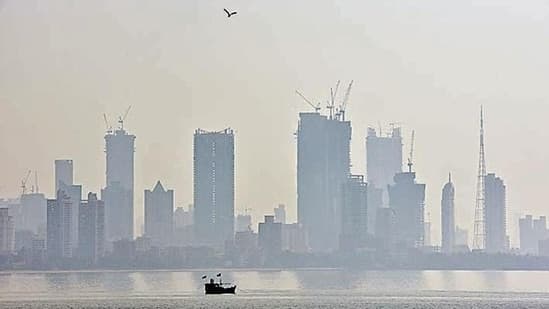
The persistent winter air quality issues in Indian cities are primarily driven by industrial precursor gases, such as sulfur dioxide and nitrogen dioxide, which react with ammonia from agriculture to form the dangerous PM2.5 particles. This chemical smog, rather than just construction dust or farm stubble, constitutes the core of the pollution problem. Atmospheric conditions in winter compress these pollutants, making them more accessible to lungs.
India's regulatory approach to emissions, particularly sulfur dioxide, has lagged significantly behind countries like China. While China implemented stringent Ultra-Low Emission (ULE) standards by 2015, India's Flue Gas Desulfurisation (FGD) norms, notified in 2015, have faced repeated delays, with the latest compliance deadline set for December 2027. Furthermore, India's current emission targets are considerably higher than China's ULE standards.
The market's lack of investment in pollution control technologies like FGD systems indicates a deeper policy challenge and suggests that the necessary infrastructure for air purification may not be readily available for years. This industrial failure is compounded by agricultural policies that heavily subsidize the overuse of urea, leading to ammonia volatilization and contributing to smog formation.
The current situation highlights a growing disparity, where those with financial means can mitigate air quality impacts through purifiers, while others are left exposed. This privatization of safety represents a failure in public health responsibility. Adopting China's ULE guidelines, supported by green financing and updated tariffs for energy and transportation sectors, is presented as a viable economic and ecological path forward.