Home / Environment / Iceland's Purple Bloom: Beautiful Invasive Threat
Iceland's Purple Bloom: Beautiful Invasive Threat
25 Jul
Summary
- Alaskan lupins imported in 1945 to restore soil now threaten native flora.
- The plant's nitrogen-fixing ability alters soil, harming native species.
- Climate change is projected to double suitable lupin habitat by 2080.
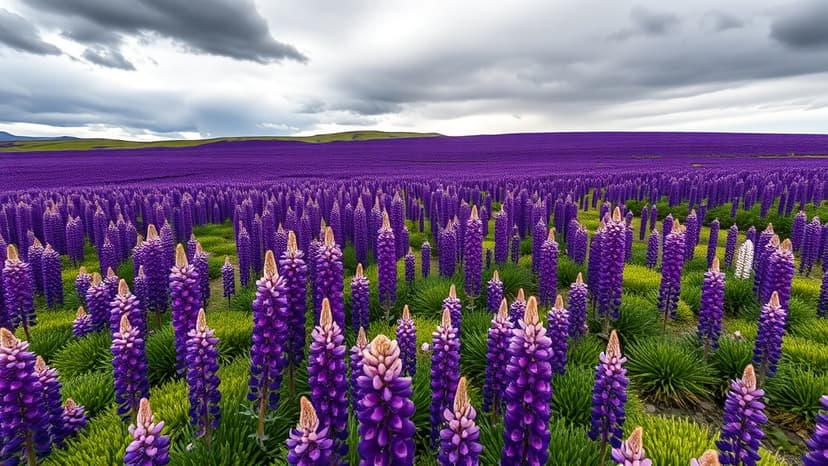
Introduced in 1945, Alaskan lupins were initially brought to Iceland to restore depleted soils and aid reforestation efforts. Decades of environmental damage had left the land vulnerable to erosion. The lupin's nitrogen-fixing capabilities and strong roots proved effective in improving soil fertility and preventing further degradation.
However, the rapid spread of these purple flowers has created unforeseen ecological consequences. Dense lupin stands significantly alter soil composition, making it difficult for many native Icelandic species to survive. This has led to a marked decrease in plant diversity, particularly in sensitive heathlands, with some native flora becoming rare or disappearing entirely.
Scientists warn that the threat of lupins is intensifying due to climate change. Projections indicate that areas suitable for lupin growth in Iceland could more than double by 2061-2080, expanding into higher elevations. While human activity initially facilitated their spread via roads, a warming climate will likely become the primary driver of their future expansion into new territories.
The debate over lupins in Iceland is complex. While still valuable for rehabilitating severely degraded land, conservationists express concern that their unchecked growth on undamaged terrain can eradicate unique ecosystems and promote uniform vegetation. This invasive species is recognized by the Icelandic Institute of Natural History as a growing problem, emphasizing the need to carefully consider planting locations.


