Home / Environment / Himalayan Glaciers Melting Fast: Flood Danger Grows
Himalayan Glaciers Melting Fast: Flood Danger Grows
28 Aug
Summary
- Glacial floods are increasing significantly in the Himalayas.
- Himalayan glaciers are warming much faster than the global average.
- Early warnings and cooperation are crucial for disaster prevention.
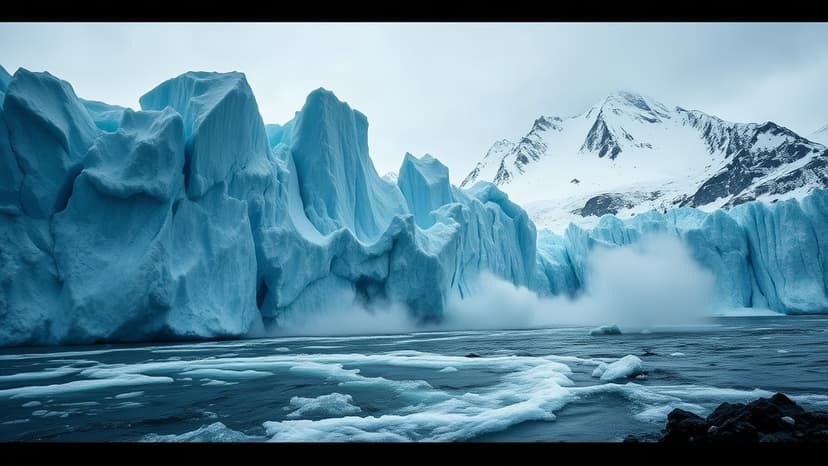
Disasters like the recent flash flood on the Nepal-Tibet border, potentially caused by glacier or ice-rock slide events, are becoming more common. Historical floods from glaciers in Ladakh were isolated, but now glacial lake outburst floods (GLOFs) are surging. Between 1900 and 2000, 135 GLOFs occurred; this century has already seen 85.
The Himalayas, with approximately 22,800 sq km of glaciers, are warming at a rate far exceeding the global average. This accelerated melting leads to increased glacial lake formation. When these lakes breach, they unleash immense water volumes, particularly during the June-August rainy season.
Projections indicate a substantial ice loss, with some estimates suggesting 65% of regional ice could disappear by 2100. Reversing this trend is difficult due to the long lifespan of atmospheric carbon dioxide. Therefore, adaptation is key.
Governments must implement safety measures, including relocating populations from flood-prone valleys and restricting construction in fragile mountain areas. The development of satellite-based early-warning systems is critical for monitoring glaciers and lakes, providing timely alerts to at-risk communities.
Cross-border collaboration is vital, as rivers and glaciers transcend national boundaries, impacting countries like India, China, Pakistan, Nepal, and Bhutan. Proactive measures, such as Bhutan's approach of constructing spillways to lower dangerous glacial lake water levels, demonstrate effective risk reduction and protection of livelihoods and ecosystems. Ultimately, combining enhanced planning, swift warnings, and cooperative efforts can transform potential natural disasters into manageable events.


