Home / Environment / Himalayan Infrastructure Boom Fuels Disaster Risks
Himalayan Infrastructure Boom Fuels Disaster Risks
29 Aug
Summary
- Deadly flooding killed over 600 people, leaving 2,500 missing.
- Himalayan nations are rapidly building infrastructure.
- Climate change makes natural disasters more extreme and unpredictable.
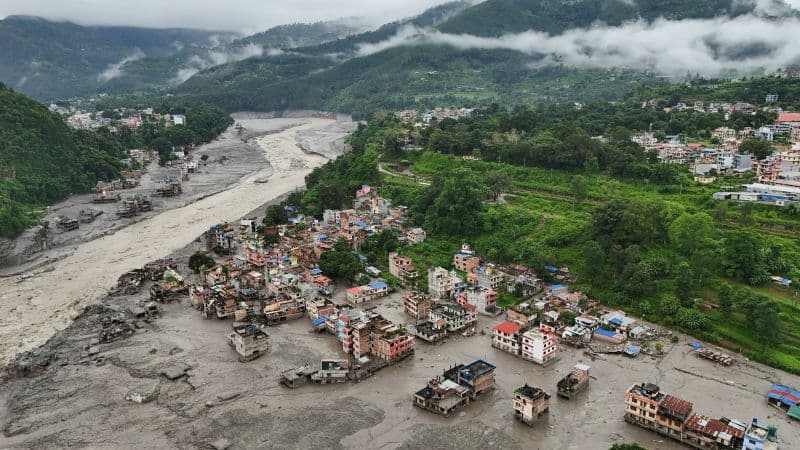
Recent deadly flooding along the China-Nepal border, which resulted in over 600 fatalities and approximately 2,500 missing individuals, has underscored escalating natural disaster risks in the Himalayas. This event occurred amidst a significant increase in high-altitude infrastructure development across the region, driven by national energy and security interests.
China is leading this development, aiming to transform Tibet into a green-energy hub with ambitious projects like a $168 billion megadam. India and Nepal are also investing heavily in infrastructure such as dams, tunnels, and railways. These developments are occurring in an area highly susceptible to earthquakes, natural hazards, and climate change impacts.
The devastating flood, triggered by a glacier collapse, caused widespread destruction of villages, roads, and hydropower stations. Rescue efforts have been perilous due to the threat of secondary disasters like landslides and floods from newly formed barrier lakes. Chinese leader Xi Jinping acknowledged the immense challenges in rescue operations due to the region's geological hazards and variable weather.
Experts suggest that while the recent catastrophe was not directly linked to development, it should prompt a reevaluation of how infrastructure projects are designed, situated, and scaled. The increasing frequency and unpredictability of extreme weather events due to climate change necessitate greater regional cooperation in monitoring shared risks and implementing robust early warning systems.


