Home / Environment / Himachal Toxic Effluents Poison Punjab's Satluj River
Himachal Toxic Effluents Poison Punjab's Satluj River
14 Feb
Summary
- Industrial waste pollutes Sirsa Nadi, impacting Punjab's Satluj River.
- Groundwater depletion forces farmers to deepen wells at high cost.
- Heavy metals in water pose significant cancer risks to populations.
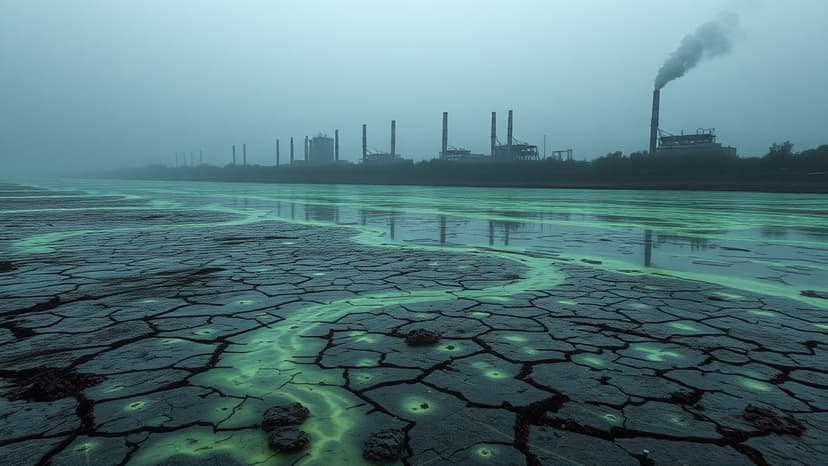
An environmental crisis has erupted between Himachal Pradesh and Punjab due to industrial pollution. Untreated toxic effluents from Himachal's Baddi-Barotiwala industrial belt are being discharged into the Sirsa Nadi, which carries them directly into Punjab's Satluj River.
This industrial growth has severely impacted local resources. The extensive use of deep bore wells by pharmaceutical industries has led to a groundwater deficit, causing water levels to drop by 8 to 25 meters over the past 15 years. Farmers are forced to incur substantial costs to deepen their agricultural wells.
The polluted water eventually reaches Punjab's Ropar Wetland, a protected Ramsar site. The industrial waste has been linked to the death of fish and migratory birds. Water analyses revealed heavy metals such as arsenic, lead, and cadmium exceeding permissible limits, posing significant cancer risks.
Locals report a decrease in interest in agriculture and animal husbandry, with crops disappearing due to toxic dust. Industries have also failed to provide local employment, preferring outsiders to avoid trade unions. Many locals have shifted their livelihoods to small businesses or transport.
Studies indicate an annual groundwater deficit of 263.51 ham due to excessive extraction. Recommendations include constructing earthen dams and check dams for rainwater harvesting and groundwater recharge, similar to practices in Haryana. Improved inter-state coordination is crucial for watershed-based treatment and pollution control.