Home / Environment / Gurgaon's Groundwater Crisis: Extraction Soars 194.6%
Gurgaon's Groundwater Crisis: Extraction Soars 194.6%
7 Mar
Summary
- Gurgaon extracts groundwater at 194.6% above permissible limits.
- Industrial demand accounts for a significant share of water use.
- Groundwater recharge heavily depends on monsoon rainfall.
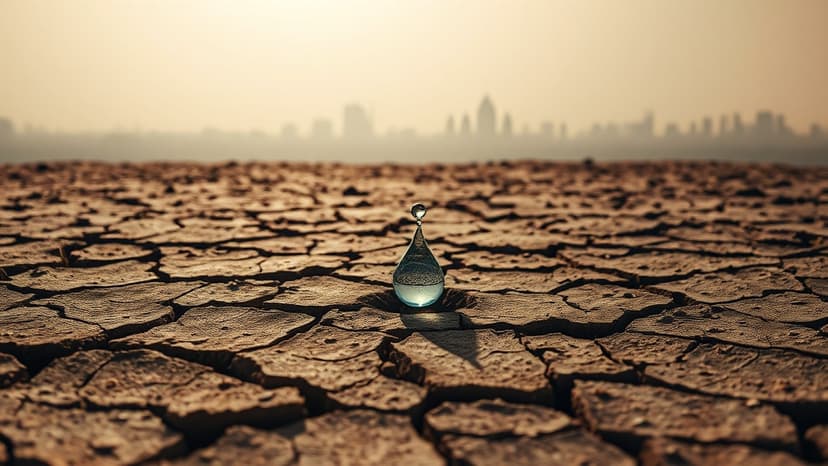
Gurgaon's groundwater extraction has reached a critical level, with withdrawals reported at 194.6% above the permissible limit in 2025. While this marks a marginal decrease from 195% in 2024, the situation remains dire as the city continues to deplete its aquifers faster than they can naturally replenish. The total groundwater drawn was 40,396 hectare-metres, significantly exceeding the sustainable extractable resource of 22,923 hectare-metres.
Industrial demand constitutes a substantial portion of this extraction, accounting for approximately 17,142 hectare-metres. Domestic consumption adds another 5,191 hectare-metres, while irrigation uses over 21,267 hectare-metres, particularly in peri-urban areas. This heavy reliance on groundwater is partly due to the city receiving only 570 million litres per day of treated surface water, falling short of its peak demand of 675 MLD.
Groundwater recharge in the region is critically dependent on monsoon rains, which contribute about 9,567 hectare-metres. Other sources provide additional recharge, but overall replenishment is insufficient to meet the extensive extraction. Across Haryana, many districts, including Panipat and Karnal, also report severe groundwater stress, with over 61% of assessed units classified as 'over-exploited'.
Experts attribute this pressure to rapid urbanisation, industrial growth, and an increasing population, leading to a surge in water demand. The insufficient piped water supply in many areas further compels residents and industries to rely on private borewells. Environmental concerns have led to repeated warnings from authorities, including the National Green Tribunal, which has criticized the state government's efforts to curb illegal extraction.