Home / Environment / New Tech Revives Gulf Corals 16 Years Later
New Tech Revives Gulf Corals 16 Years Later
13 Aug
Summary
- Lab-reared corals are now being returned to the deep seafloor.
- A "coral torpedo" device aids precise coral placement underwater.
- Technical divers used rebreathers for extended deep-sea missions.
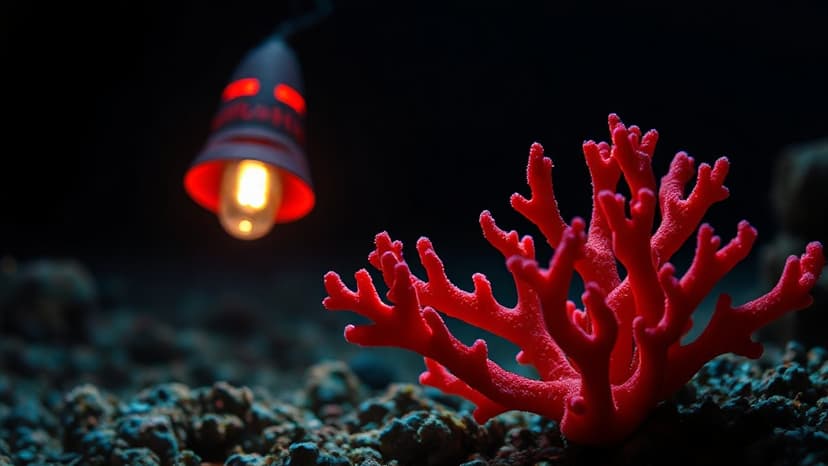
Sixteen years following the Deepwater Horizon oil spill, scientists are actively developing advanced strategies to aid the recovery of injured coral ecosystems in the Gulf of Mexico. A recent restoration mission integrated laboratory-cultivated corals with specialized technical diving and novel equipment to successfully reintroduce corals to the deep seafloor.
This initiative focuses on rebuilding foundational mesophotic and deep benthic habitats that were significantly damaged by the 2010 oil spill. Key to this effort has been mastering the collection and propagation of mesophotic corals in controlled laboratory settings. This research has yielded vital knowledge about coral reproduction and growth, enabling the cultivation of new colonies for eventual ocean reintroduction.
The spring 2026 mission aboard the NOAA Ship Nancy Foster marked a critical advancement by outplanting these propagated corals. A newly developed device, the "coral torpedo," proved instrumental in efficiently transporting coral specimens to divers positioned hundreds of feet below the surface for precise outplanting on specially designed concrete structures.
This restoration required highly skilled technical divers equipped with closed-circuit rebreathers for extended underwater durations. The mission achieved several significant milestones, including the outplanting of 26 mesophotic corals and the relocation of 16 coral fragments to foster new colonies. The project continues to monitor the transplanted corals to assess their long-term survival and growth.


