Home / Environment / Rising Human-Leopard Conflict in Gujarat
Rising Human-Leopard Conflict in Gujarat
23 Feb
Summary
- Leopard population in Gujarat increased significantly from 2016 to 2023.
- Dedicated rescue centers house leopards involved in fatal human attacks.
- Deforestation and habitat loss are primary causes of human-leopard conflict.
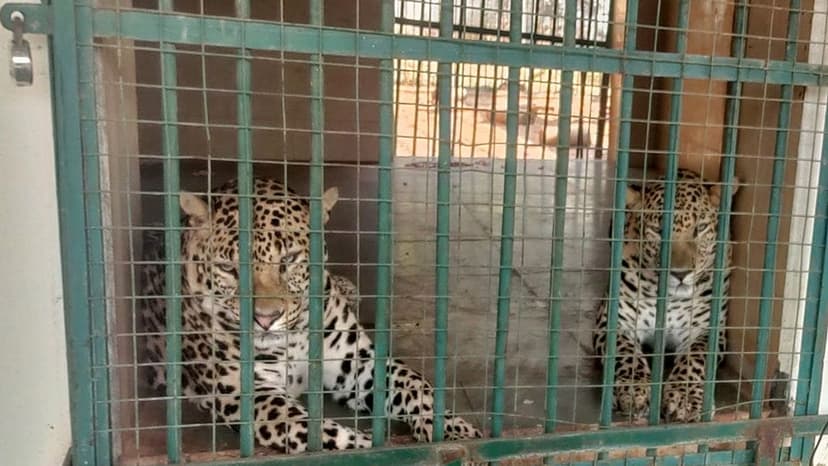
Gujarat is grappling with an escalating number of human-leopard conflicts. The state's leopard population has seen a substantial increase, rising from 1,395 in 2016 to 2,274 in the latest census. This rise is largely attributed to deforestation and shrinking habitats, pushing leopards into closer proximity with human settlements.
Specialized rescue centers, such as the one in Dhanpuri, Jambughoda, house leopards responsible for fatal human attacks. These animals, some deemed 'man-eaters,' may remain in captivity for life. For instance, Arjun, rescued in June 2025, was involved in multiple human attacks, including a fatal one on a child.
New facilities and sanctuaries are being planned to address this growing issue. A large-scale sanctuary is under consideration for South Gujarat or Sauras Saurashtra, potentially spanning 10 hectares to safely contain problem leopards. Rescue centers in Surat and Navsari also house leopards following human attacks.
Experts note that sub-adult leopards, between 2 to 2.5 years old, are more prone to attacking humans, often mistaking them for prey due to their smaller size. These conflicts are exacerbated by the leopards' adaptive behavior and prey base depletion, leading them to seek food and water near human habitations, often in sugarcane fields.