Home / Environment / Greenland's Ice Melts: Dog Sleds Bounce on Bare Earth
Greenland's Ice Melts: Dog Sleds Bounce on Bare Earth
17 Feb
Summary
- Dog sleds now bounce over earth and rock due to lack of snow and ice.
- Melting glaciers significantly contribute to rising sea levels globally.
- Loss of sea ice threatens Inuit culture and traditional hunting grounds.
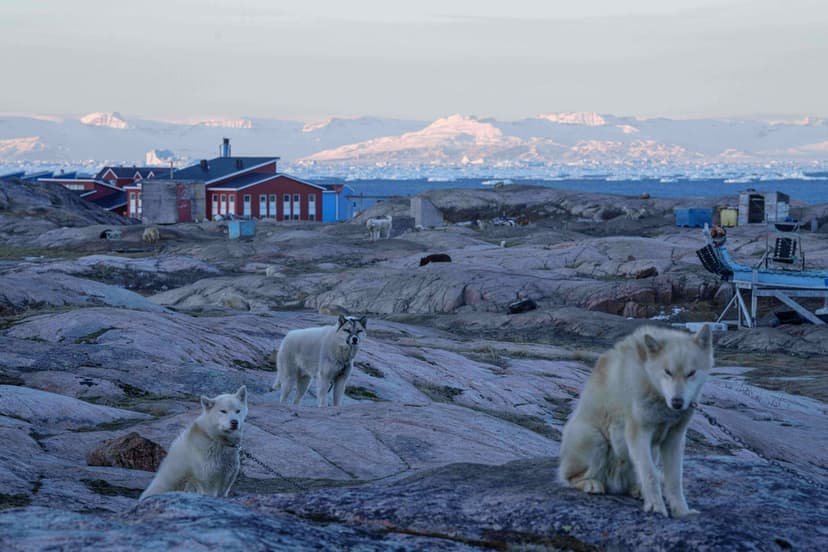
Growing up in a village in northern Greenland, Jørgen Kristensen's formative years were marked by a deep connection with his stepfather's sled dogs. Now 62, Kristensen, a five-time Greenlandic dog sled champion, observes a profound environmental change. This winter, in Ilulissat, the traditional dog sled journeys are impossible as the sleds bounce over earth and rock instead of snow and ice. Kristensen notes the unprecedented January absence of snow and ice in the bay, a stark contrast to temperatures that previously hovered around -25 Celsius (-13 Fahrenheit) in the 1980s, now frequently above freezing and sometimes as warm as 10 Celsius (50 Fahrenheit).
The melting permafrost in Ilulissat causes infrastructure damage, but its global impact is more significant. The Sermeq Kujalleq glacier, one of the planet's fastest-moving, sheds immense ice into the sea, a major contributor to rising global sea levels, as documented by NASA. This warming climate also presents geopolitical intrigue, with some believing it is linked to former U.S. President Donald Trump's interest in acquiring Greenland for its untapped mineral deposits. The loss of sea ice, which historically served as vast highways connecting communities across the Arctic, deeply distresses Kristensen and threatens the core of Inuit culture and traditions. Hunters and fishermen face increased danger due to unpredictable ice conditions, with rain-induced ice being particularly hazardous. The Arctic is warming three to four times faster than the global average, a trend that scientists urge global leaders to address.
Beyond cultural and economic impacts, the melting ice is a critical indicator of global climate change. Karl Sandgreen, head of Ilulissat's Icefjord Center, notes the Sermeq Kujalleq glacier has retreated approximately 40 kilometers (25 miles) in his lifetime, revealing previously ice-covered valleys. Pollution, including black carbon from ship engines and volcanic debris, accelerates this melt by darkening snow and ice, increasing heat absorption. Kristensen emphasizes the urgency of climate education, comparing Greenland's glaciers to the Amazon rainforest and stressing the importance of teaching children worldwide about the value of ice and oceans to protect nature for future generations.