Home / Environment / Greek Fir Trees Dying Off Amidst Climate Crisis
Greek Fir Trees Dying Off Amidst Climate Crisis
19 Dec, 2025
Summary
- Greek firs are dying in Peloponnese mountains, even without fires.
- Prolonged drought and invasive bark beetles are killing the trees.
- Climate breakdown exacerbates these pressures, creating an ecological crisis.

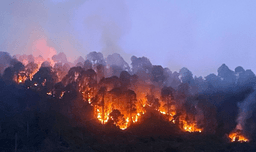
The majestic Greek firs in the Peloponnese mountains are facing an unprecedented crisis, with vast swathes of forest turning brown and dying. Even areas not affected by fires are showing significant tree mortality, alarming scientists like Dimitrios Avtzis from the Forest Research Institute. This complex die-off is not solely due to fires, which have historically been a part of the ecosystem.
Researchers point to a convergence of factors intensified by climate breakdown. Severe, prolonged drought has weakened the trees, exacerbated by declining winter snowpack which reduces crucial moisture. This vulnerability allows bark beetles, particularly of the Scolytinae subfamily, to thrive, boring into trees and disrupting their vital water and nutrient transport systems. These insect outbreaks are becoming a significant threat across Europe.
While Mediterranean ecosystems possess regenerative capacity, recovery is slow and may take several years. Forest climatologist Nikos Markos suggests that post-fire regeneration can be satisfactory, but emphasizes the need for immediate government action. Mobilizing funding and implementing recovery plans are critical steps to confront this escalating ecological challenge and protect Greece's highland forests from future, more frequent, and intense climate-related events.