

Home / Environment / Gomti River Gasping: Tributaries Choked, Flow Vanishes
Gomti River Gasping: Tributaries Choked, Flow Vanishes
26 Apr
Summary
- Tributaries choked by encroachment and stagnation reduce river's natural recharge.
- Reduced flow impacts aquatic life, with only juvenile fish observed.
- Restoration requires reviving tributaries and protecting groundwater systems.
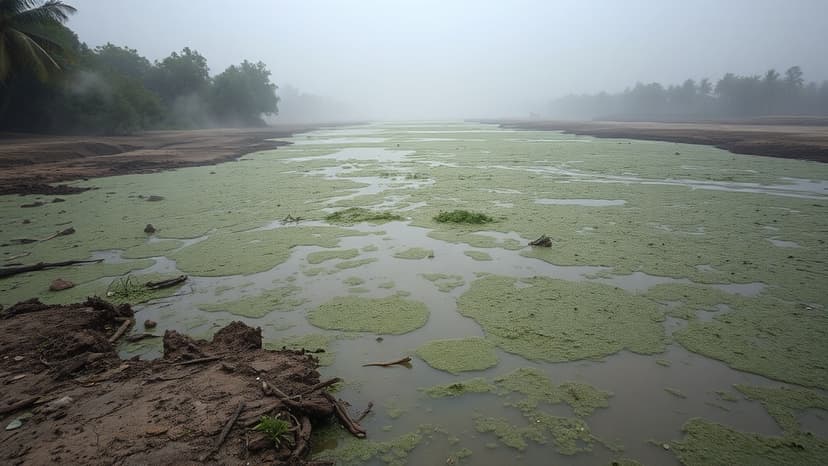
The Gomti River, a lifeline for over 40 lakh residents, is experiencing a drastic reduction in flow due to severe blockages in its key tributaries. A recent study revealed that streams like Behta, Sai, and Kukrail are choked by encroachment and stagnant water, cutting off the river's natural recharge mechanisms. This ecological imbalance is starkly visible along the riverbanks, where reduced flow velocity and discharge have decimated aquatic life, leaving only juvenile fish.
Farming activities and solid waste dumping further pollute the Behta river, impacting water quality and the vital river-floodplain interaction. Similar degradation affects other tributaries, limiting their capacity to dilute pollutants and sustain ecosystems. Experts emphasize that the Gomti's survival is intrinsically linked to the health of its tributaries and the groundwater systems they depend on. Falling groundwater levels exacerbate the problem, leading to fragmented river flow and ecological disruption.
While some stretches, like one in Sultanpur district, show better flow and water quality, the overall trend is alarming. The river's source in Pilibhit also exhibits low water levels and dry stretches. To combat this crisis, recommendations include ensuring year-round environmental flow, mapping and restoring tributaries, preventing untreated wastewater discharge, establishing protection zones, and reviving groundwater recharge systems.
