Home / Environment / God's Crossing Disappears as Lake Suwa Warms
God's Crossing Disappears as Lake Suwa Warms
15 Feb
Summary
- Sacred 'God's Crossing' phenomenon at Lake Suwa is rare due to climate change.
- A 583-year-old chronicle records lake conditions, valuable for climate history.
- Eight years without a crossing tie the longest recorded absence.
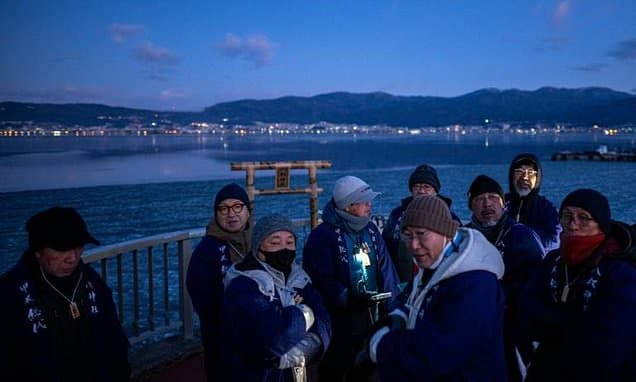
A Japanese priest and his parishioners are witnessing the impact of climate change on a sacred tradition at Nagano's Lake Suwa. The phenomenon known as 'God's Crossing' (miwatari), where ice ridges form on the frozen lake, has not occurred since 2018.
For centuries, the Yatsurugi Shrine has documented when the lake fully freezes and when the miwatari appears. This chronicle, dating back to 1443, provides an invaluable historical record of climate conditions. Geographer Naoko Hasegawa describes it as a unique and globally significant meteorological archive.
Scientists attribute the absence of the crossing to rising temperatures, preventing the lake from freezing over consistently. Takehiko Mikami, a researcher, notes that the phenomenon appeared almost every winter until the 1980s. The current eight-year hiatus equals the longest recorded period without a sighting, highlighting the accelerating pace of global warming.
Despite a brief full freeze in January 2026, the lake surface melted before the miwatari could form. Priest Kiyoshi Miyasaka has only witnessed the ritual 11 times in over four decades. This 'open sea' season, as it's called, continues the tradition of passing on a message about nature's warning to future generations.