
Home / Environment / Giving Rivers a Voice: Macfarlane's Radical Shift in Environmental Perception
Giving Rivers a Voice: Macfarlane's Radical Shift in Environmental Perception
28 Sep, 2025
Summary
- Rivers are "worshipped and mistreated", seen as resources rather than living entities
- Macfarlane's book draws on journeys to Ecuador, Chennai, and Canada, exploring rivers' enlivening qualities
- Children's perspectives on rivers being "alive" inspire Macfarlane's quest to change laws and perceptions
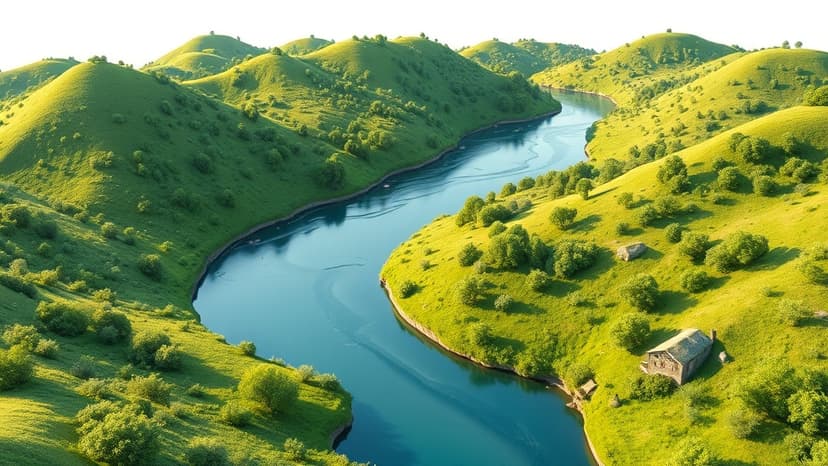
In his latest work, "Is a River Alive?", author Robert Macfarlane presents a radical shift in how we perceive and interact with rivers. Macfarlane contends that if we acknowledge rivers as living entities, it will necessitate a fundamental change in our laws, politics, and overall mindset.
The book draws on Macfarlane's three journeys - to an Ecuadorian cloud forest, the creeks and estuaries of Chennai, and the Mutehekau Shipu (Magpie River) in Canada. Interspersed with these accounts are his reflections on a drought-stricken river near his Cambridge home. Macfarlane's conversations with his young son, Will, who questions whether the local water body has "died", further animate his quest to reframe our understanding of rivers.
Macfarlane argues that the prevailing "instrumentalist" view of rivers as mere sources of water, power, or harbingers of floods is a recent phenomenon. In contrast, the worldviews of many indigenous communities have long recognized the deep connections between humans and other elements of nature. As one schoolgoer in South India tells Macfarlane, "I would say a river is alive. When I sit with my legs in the river, up to my knees, I can feel the currents in the water pushing me, holding and pulling my legs."
However, the book also paints a grim picture of the reality facing many urban rivers, such as those in Chennai, which have become "lifeless sewers, poisoned by heavy metals and prone to floods and drought." Macfarlane's journeys also introduce readers to "river warriors" fighting to save these vital water bodies, often with little support.
Ultimately, Macfarlane's work is a call for a profound shift in our relationship with rivers and the natural world. He argues that "words make worlds," and that by addressing rivers, forests, and other elements of nature as "who" rather than "it," we can begin to recognize their inherent worth and agency. As the author warns, the path forward will require humility and a willingness to listen to the rivers themselves, rather than simply imposing human desires upon them.
