
Home / Environment / Gibbons Use New Canopy Bridges Over Railways
Gibbons Use New Canopy Bridges Over Railways
16 May
Summary
- Gibbons now use canopy bridges over a railway line.
- Bridges help arboreal species cross tracks safely.
- This protects endangered apes from trains and predators.
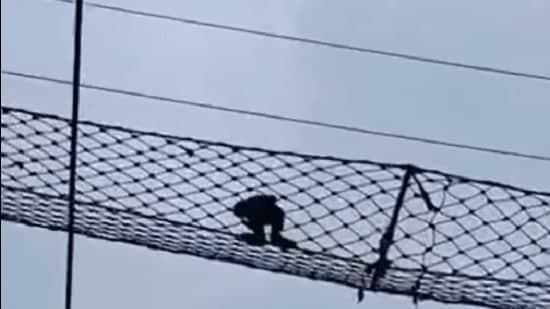
In a significant conservation success, gibbons have been documented using artificial canopy bridges constructed over a railway line in Assam, India. This is the first recorded instance globally of arboreal species utilizing these structures over a railway track.
Five rope bridges with safety nets were installed after the Lumding-Dibrugarh railway line's electrification. These aim to prevent canopy-dwelling animals, like the Western Hoolock Gibbon, from descending to the ground where they face risks.
Linear infrastructure like railways can fragment vital forest habitats. The successful adoption of these bridges demonstrates how thoughtful planning can mitigate such threats to wildlife conservation efforts.
Conservation of the endangered Western Hoolock Gibbon, India's only ape, depends on eco-sensitive infrastructure planning and habitat restoration. This initiative showcases a promising step forward for its long-term survival.
