

Home / Environment / Giant Iceberg A23a Melts Away After 40 Years
Giant Iceberg A23a Melts Away After 40 Years
8 Mar
Summary
- A23a iceberg broke from Antarctica in 1986, covering 4,000 sq km.
- Stuck for decades, it finally drifted in 2020 and began melting.
- Scientists expect the colossal iceberg to fully disintegrate within weeks.
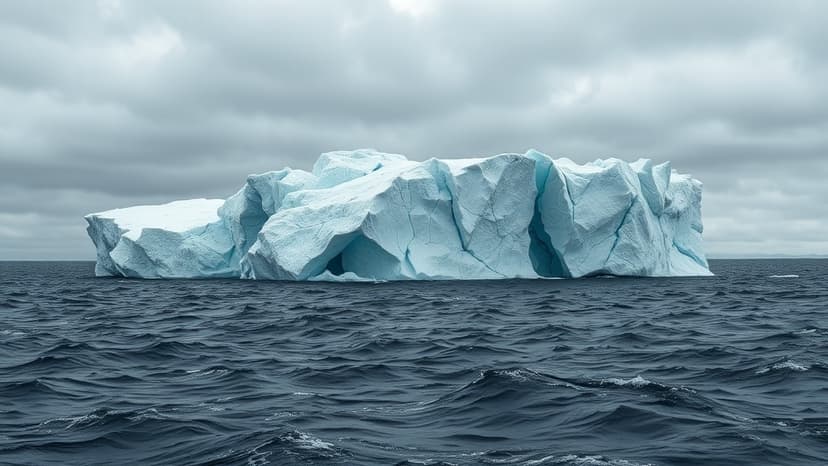
One of the world's oldest and largest icebergs, A23a, is nearing the end of its 40-year voyage across the Southern Ocean. Originating from Antarctica's Filchner-Ronne Ice Shelf in 1986 with an initial size of 4,000 square kilometers, it became grounded on the Weddell Sea seafloor for over three decades.
In 2020, A23a finally broke free and embarked on a northward journey, influenced by ocean currents and winds. It traversed "Iceberg Alley" and experienced a period of spinning within a Taylor column, a type of ocean vortex.

