Home / Environment / Global Food Waste Crisis: Cities Lead the Charge
Global Food Waste Crisis: Cities Lead the Charge
22 Sep
Summary
- One-third of global food produced is lost or wasted.
- Food waste causes 10% of global greenhouse gas emissions.
- China aims for 76% household waste recycling by 2030.
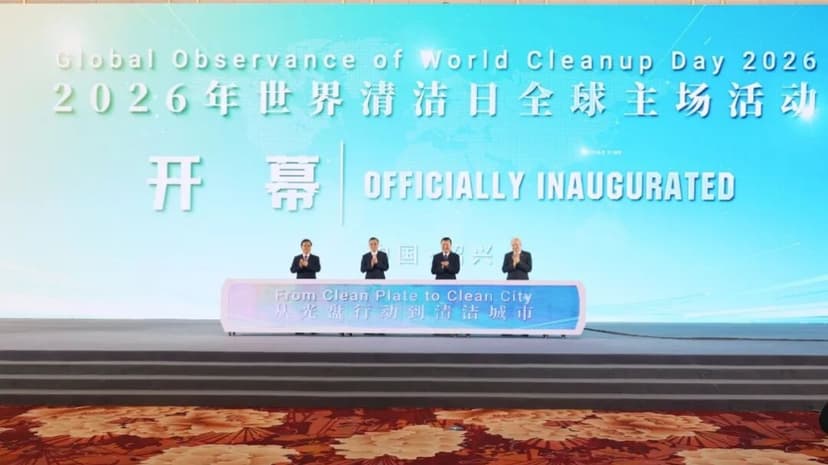
Global leaders convened in Shaoxing, Zhejiang province, to discuss food waste and sustainable urban development during the Global Observance of World Cleanup Day 2026. This event marked the first time China hosted the global observance, which focused on the theme "From Clean Plates to Clean Cities."
Anaclaudia Rossbach of UN-Habitat highlighted that one-third of all food produced globally is lost or wasted, accounting for up to 10 percent of greenhouse gas emissions. She stressed that reducing waste requires better urban planning, accessible services, and community involvement, with city and national governments playing crucial roles.
China's Minister of Housing and Urban-Rural Development, Ni Hong, reported on advancements in urban renewal and waste sorting, noting that waste sorting now covers nearly all residential communities in 297 cities. China aims to achieve an urban household waste recycling utilization rate exceeding 76 percent by the end of 2030.
The event concluded with the release of outcome documents, including "Shaoxing Practice" and the "Shaoxing Call to Action." This call encourages stronger global consensus, research into clean energy and recycling technologies, and enhanced cooperation among cities worldwide.


