Home / Environment / Endangered Tern Becomes Symbol of Cross-Strait Unity
Endangered Tern Becomes Symbol of Cross-Strait Unity
14 Jan
Summary
- An endangered tern connects Fuzhou and Matsu, highlighting shared ecosystems.
- The 'mythical bird' population is critically low, estimated at only 200.
- Terns commute daily between mainland China and Taiwan for foraging and breeding.
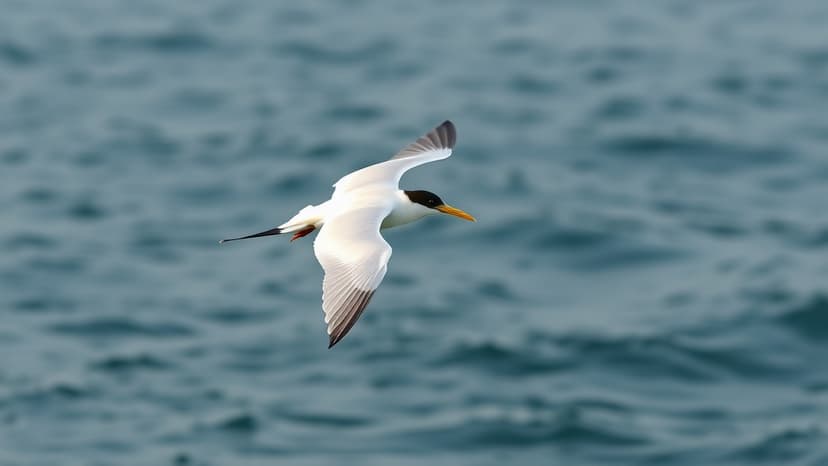
The Minjiang River estuary serves as a vital ecological link, connecting mainland China's Fuzhou with the Matsu Islands across the Taiwan Strait. This natural bridge is exemplified by the journey of the critically endangered Chinese crested tern. Once thought extinct, this elusive species now symbolizes a shared environmental mission between the two regions.
The Chinese crested tern, with an estimated global population of just 200 individuals, relies on the wetlands of Fuzhou and Taiwan as crucial stopovers along the East Asian-Australasian Flyway. Its survival became a poignant symbol in 2008 when one was rescued after its beak was trapped in plastic, a bird documented on both sides of the strait, proving a shared population.
This species exhibits a remarkable daily migration, foraging in Fuzhou by day and flying to Matsu to sleep and breed by night. This unique 'commuter' behavior mirrors the historical movement of people with shared ancestry between the mainland and Taiwan, reinforcing the deep ecological and cultural connections across the Taiwan Strait.